
King and Country
To the east, a king lay dying.

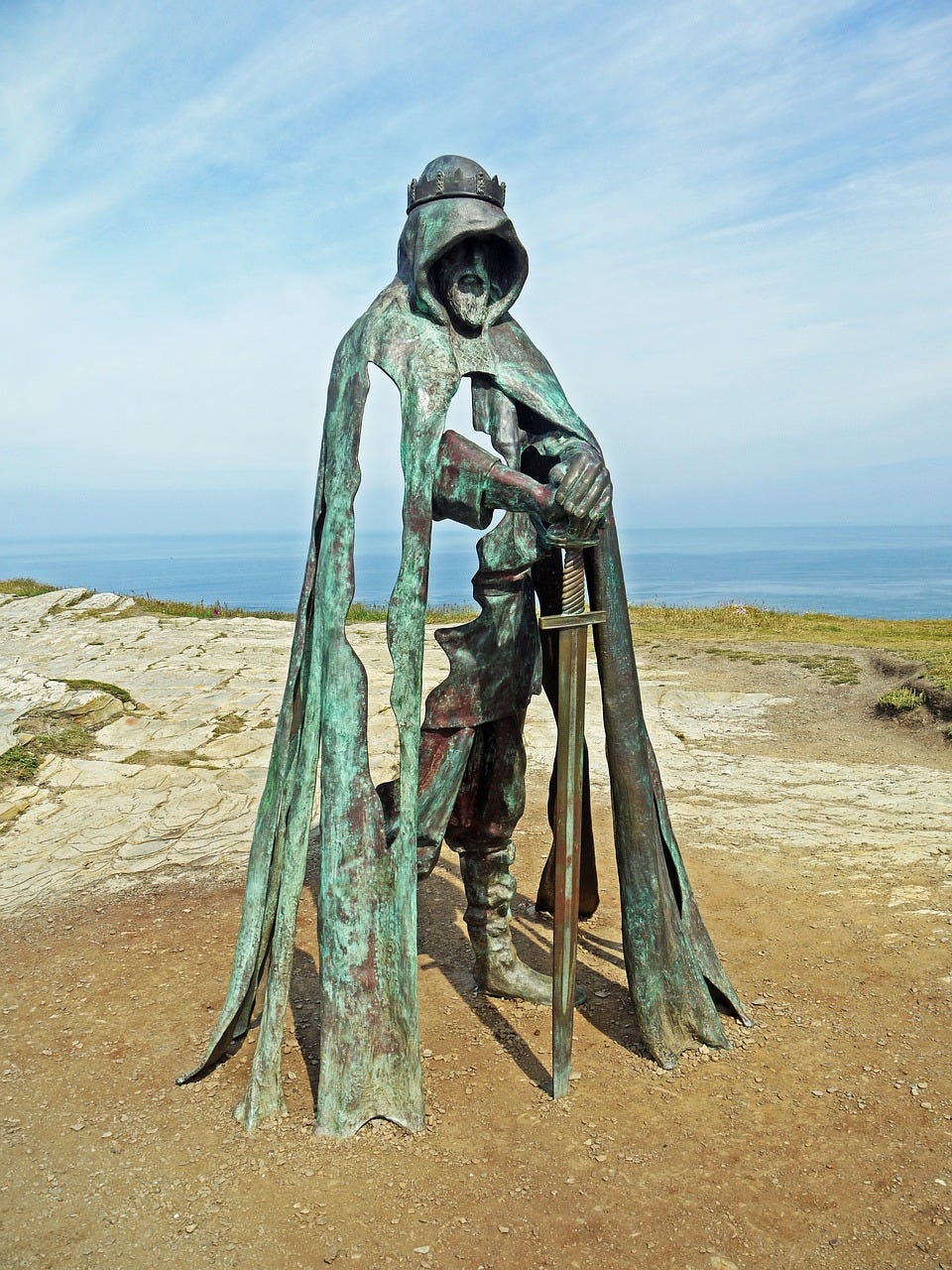
“The King’s life is drawing peacefully to its close.”
I heard the words on the radio I’d found in the shed when I moved up to the old cottage. I’d been surprised then it still worked; surprised now that the BBC still broadcast. Not all day, as they had once, but morning and evening, what news there was. Or what news they chose to tell us.
I glanced east, to where the king lay dying at his country house. High on a ridge, it had never been in danger from the floods. Floods. It wasn’t the right word: floods receded. The water that lapped at the bottom of my garden wasn’t like the flood of 1953, a year after the last king’s death. It wasn’t going to recede.
He’d cared, this dying king, but like Canute he’d known he could do nothing against the inexorable tide. Not just of the sea, but of rising temperatures, fractured societies, failed treaties. The accords he’d signed, or his ministers for him, had meant nothing. Changed nothing. Kings couldn’t.
Holbeach, this parish was called, and four hundred years past the water had lapped at my cottage’s garden too. Then some nobleman had paid engineers to drain the land and build the seawalls, half a day’s walk east. What had been saltmarsh and creek, the water coming and going with the tide, became fertile land, first for grazing, then for the plough.
Until ten years ago.
We’d seen it coming, the seawalls left unrepaired, the water making inroads with every storm. Then the same combination of wind and rain and moon that had caused the ’53 flood came again, and when the storm and the night were over, the sea had drowned fields and towns and roads. People and animals, too, lost to the rising waters, the too-late realization that the warnings were serious. There’d been so many by then: alarms about viruses, food shortages, fuel shortages, drought. People stopped listening.
But I’d watched the dog whine and pant, and I’d seen the flights of the pink-footed geese in from the sea, where they should have been resting on the waters, safe for the night, and the other birds after them. There was no one to convince, and not much to leave behind. I’d been fairly sure the cottage, on its spur of high ground, would be safe. I’d been right.
Ten years ago.
There weren’t many of us left here, in this place that wasn’t quite water and wasn’t quite land. The Beachlands, some called it now, for the drowned town and its outlying villages. Most people couldn’t survive in these marshes. But I’d been in my grandfather’s care a lot of the time as a child, and he’d taught me things. How to row a boat, how to fish; how to shoot. Fenland skills. I’d learned some more, in my stint in the army. I got by.
The tide was going out. I whistled to dog to heel, shrugged on my rucksack, picked up quiver and bow. There were paths through the Beachlands, for those who knew, paths that skirted pools where ducks dabbled, or higher spots where geese grazed, and sometimes the water deer that thrived where the native species couldn’t. I wouldn’t take down a deer unless I was sure I could retrieve the carcass; it was beyond the dog’s strength. So we ate a lot of wildfowl, along with fish, but at least we ate.
Sometimes, too, the Beachlands gave us other things, washed in or uncovered by the persistent ebb and flow of the tide. Plastic jugs, bricks, glass jars. Coins, which I hoarded for my twice-yearly trips to a distant market town. Fishing floats and driftwood. Bones from the cemeteries that lay under the water.
The sun was sinking westward; a good time for waterfowl. They’d be coming in for the night. A life was sinking too, a man who’d waited too long to be king; a prince waiting to inherit—what? Decay and destruction, another tide too hard to turn.
There were those who said the prince could turn that tide, those who would point to the date of his birth, the name he bore, slipped in among all the others. My grandfather had been one. Rank superstition, of course.
Ahead I heard the quacking of mallards, saw a pair circling high. They’d drop down to join the others in the pool. I told the dog to sit, knelt to shed my rucksack. My eye caught something gleaming in the mud. Glass. I noted the spot, nocked my arrow, took down the duck.
On my command the dog plunged into the water after it. I dropped the bow, went to free the jar from the mud. Maybe it was whole. Jars were useful.
It wasn’t a jar. I brushed more mud away. Sat back on my heels. A stone—an emerald?—set in metal. Dull metal, filthy. I dug at it with my fingers. Uncovered more of it, an unbelieving certainty growing.
It took me an hour. Mud caked my arms beyond my elbows. But what I held across my knees hadn’t been seen for eight hundred years. Not since a king called Lackland, crossing these marshes, had lost the crown jewels of England.
I hadn’t known there had been a sword among them.
I took it to the pool, knelt. Washed the mud off it. Saw the tracery on the hilt, around the stones. The broad blade. To the west, the sun sank lower.
To the east, a king lay dying.
I got to my feet. I’d go by boat; it was quickest. Safest, too. I’d avoid the wreckage of towns, the gangs, those who called me witch. I could be there as the sun rose, to hand the sword to the prince who’d been born on the summer solstice. The prince—he’d be king by then, I was sure—who bore the name Arthur. The king who would come again, when his land had its greatest need. Whose sword I held, standing where earth and water and sky met, an unreasoning hope rising in my heart.
The twist of discovering King Arthur’s legendary sword was incredible and took me by surprise! I can’t wait to see how the story unfolds in the next part—eagerly looking forward to it!