
Midwinter's Eve
A vignette from my first novel, Empire's Daughter. The narrator, Lena, is at the Emperor's winter camp after a successful repulsion of an invasion a few weeks earlier.

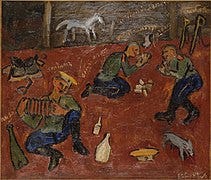
THE CAMP SEEMED NOISIER THAN USUAL, with voices raised in song and laughter, Midwinter’s Eve being a traditional time of fun and feasting. Inside, the junior commons smelled wonderfully of food. Gulian, seeing me come in, poured a cup of something and handed it to me. It steamed, smelling of spices. I sipped carefully, tasting cider.
We ate roast pig and goose with winter vegetables, followed by nuts and dried fruits. Spirits ran high. “I’d rather be me than the Emperor, tonight,” Finn shouted in my ear at one point. “He has to entertain the governor of Leste. It’ll be all protocol and politeness, there.”
Instruments—an elbow pipe among them—squeaked and moaned in discord while their players tuned them. The stewards moved the tables back, leaving a clear space in the centre of the tent. A lively, irresistible jig began. I let myself be pulled onto the dance floor. The dance had steps, and I worked them out after a minute or two—a pattern of back and forth, meetings and partings. No one minded my missteps, and when that dance ended and another began, I kept dancing.
Later, hot and sweaty and thirsty, I stood beside Finn when the pipes changed their tone to something low and mournful. The tent fell silent. One man stood alone on the floor. When the drummer began a low, slow beat, he began to dance, slowly and formally, his hands raised, his fingers gesturing. I did not understand what I saw, but my throat tightened.
“What is it?” I whispered to Finn.
“The Breccaith,” he whispered back. “It is always danced this night, and at Midsummer, to remember those who will never feast with us again.”
I watched the dance, and the faces of the men I could see in the firelight. Some shed unabashed tears. The stewards moved silently among us with trays bearing filled cups. Finn handed me one, indicating with his fingers not to drink. The music slowed, and the drumbeats ended. On a last wail of the pipes, the dancer sank to the ground.
In the silence that followed, Finn raised his cup. “To our fallen brothers.”
“To our brothers,” the tent echoed.
“And sisters,” I said quietly, drinking the toast. The dancer stood to join his friends, and the music began again, now softer, less insistent. The men danced in pairs or small groups. Finn touched my shoulder.
“Will you dance with me?”
We moved onto the dance floor. He took my hands, showing me the steps. “You dance well.”
“I was taught by a woman from Karst,” I said, remembering the lessons on the playing field at Tirvan, all those long months ago.
“The one who was killed?”
“You remembered.”
“We’re trained to,” he said simply. “Every man, every officer. And not just to send the messages back to the women’s villages or to brothers or sons in other regiments, but so their lives and deaths are not without meaning. It is what an officer must do. We live our lives to honour those who died.”
I wanted to point out that I wasn’t an officer, but I stopped myself. I had been one when Tice died.

The commons still rang with song—somewhat off-key—when I excused myself and left. The watch had changed an hour ago. The newly off-duty junior officers had appeared at the commons, wanting food and drink, determined to make up for the four hours they had missed. We had all eaten again and joined them in more toasts. I was beyond satiated, and more than somewhat drunk. At my tent, I stripped off my outer clothes, falling onto my camp bed, my head spinning. I heard a voice coming from the camp, young and true, raised in solo song:
The swallows gather, summer passes,
The grapes hang dark and sweet;
Heavy are the vines
Heavy is my heart
Endless is the road beneath my feet.
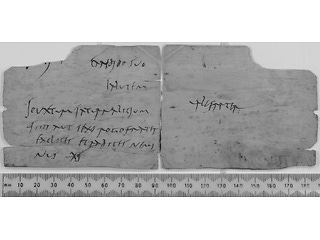
All - or almost all - northern hemisphere cultures have a festival close to the winter solstice. In Lena’s case, the military celebration here has its roots in the Roman Saturnalia, a time of celebration and ‘misrule’, when many restrictions were lifted and freedoms temporarily granted. In a military camp, soldiers may not have had the same licence as in a city, but from a writing tablet found at Vindolanda Roman Fort in 1988, a letter from one enslaved man to another, asking him (possibly) to source radishes for Saturnalia, we know it was celebrated. That it was also a day to perform a tribute to fallen soldiers was entirely my own invention.
This is the last post in History & Imagination until January 4, 2025. I wish everyone who celebrates a blessed solstice, Merry Christmas, Happy Hanukkah, Happy Kwanzaa, or however you acknowledge, in the northern hemisphere, the long nights and the gradual return of the light.
Empire’s Daughter is currently on sale on Amazon and other markets.
If you’re not a fan of mega-corporations, find my books via https://scarletferret.com/authors/marian-l-thorpe
Check out a wide range of fantasy and sci-fi offerings or a wide range of fiction, all free.