
Rivalry
“Can you hit like that regularly?”

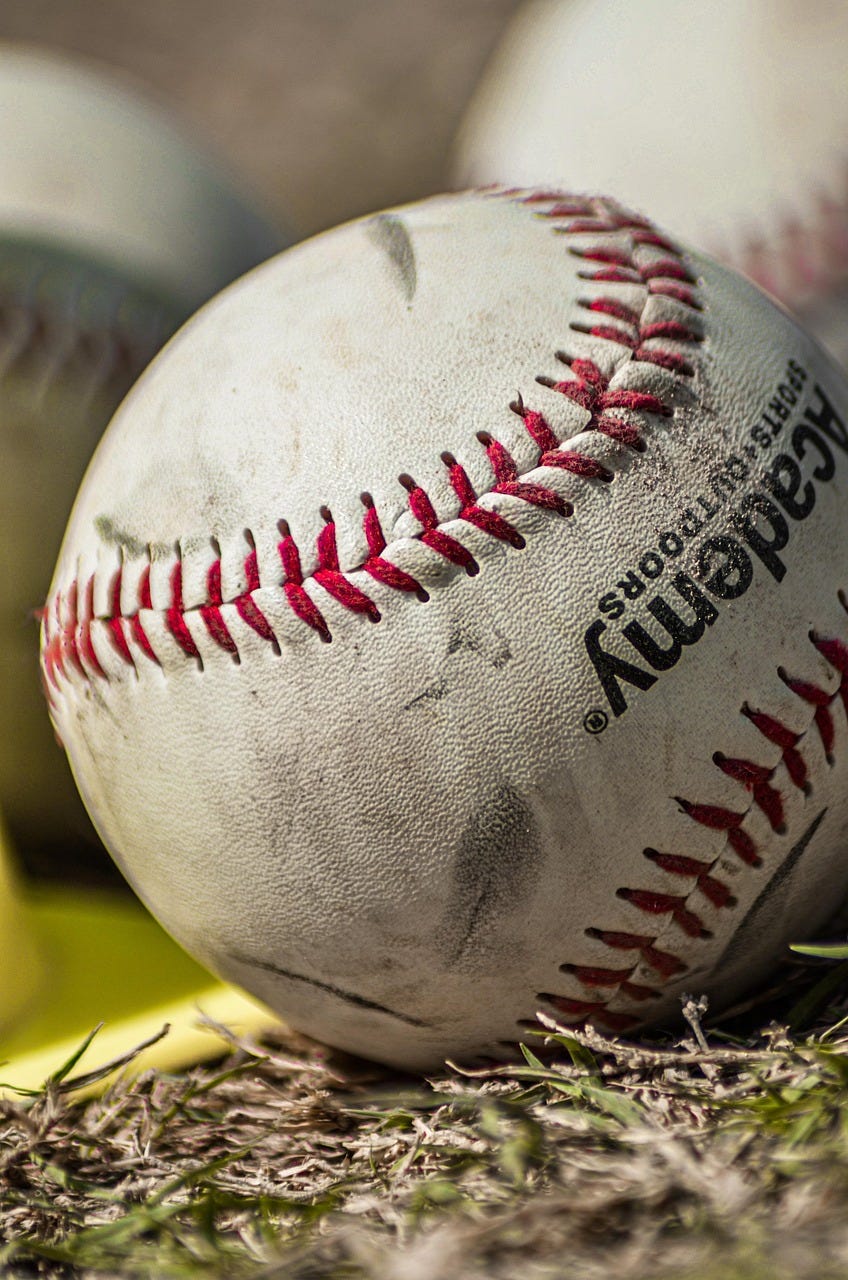
Summer, back when televisions got seven stations, and glass bottles of milk appeared on your doorstep early every morning. Hot days, warm nights, when the air was as heavy as a blanket and filled your nostrils with the sharp smell of vinegar and the tang of tomatoes from the canning plant working three shifts a day. School starting the next week, even though a bunch of kids wouldn’t show up until October, when the harvest was over.
The rivalry with the next town down the highway was as old as the settlements, I’d guess. As old, at least, as the fall fair, held Labour Day weekend, its beginnings going back to 1854. Winning the tug-of-war competition had been a bragging point at the hotels and roadhouses all winter once. Still was, I guess, but not as much as baseball now.
The Saturday night game. Nine p.m., when the first stars began to prick through, and the temperature started to drop a little, if we were lucky. Moths around the field lights, little kids allowed to stay up late climbing on the metal struts that supported the boards of the green-painted grandstand. Past the outfield, the Ferris wheel and the swing boats, hot dog stands and pony rides. The music from the stage show barely audible over the shouts of carneys and the clatter and chatter of the midway.
The tractor, first, pulling a rake to even out the sand, pocked by hoofmarks from the horse show earlier in the day. Then the lines were laid, the chalk glittering white. People began to arrive to get the best seats, clutching bags of popcorn or cones of cotton candy. Home team supporters always on the left facing the field, under the shade of the old maples.
I finished tying my cleats and picked up my favourite ash bat to knock a few balls around. Pickles jogged out onto the grass to retrieve them. A wiry boy, maybe 5’ 4”, his father grew cucumbers contracted to the canners. Pickles played shortstop, with a quick glove and a fast and accurate arm.
From the corner of my eye I saw Ohio arrive, his cap stuck in his belt so that his blond hair wasn’t sweaty and stuck to his head. He picked up a bat from beside the dug-out. After a couple of steps onto the field, he pulled a ball from his pocket, and lobbed it neatly out to Pickles. Just a practice hit, no effort behind it.
Ohio was our secret weapon this year. His real name was Ralph, but no one called him that. He’d arrived in June, when the U.S. schools got out, to spend a year on his uncle’s farm. Rumours ran rampant: he’d been expelled from his high school for cheating; he’d stolen a car to go joy-riding; he’d got a girl pregnant. What the truth was, I never knew, and Ohio wasn’t about to say.
But he was enrolled in our little high school for his last year, and so he was eligible to play for us. More to the point, he’d been recruited, by Pickles of all people. His father’s farm and Ohio’s uncle’s adjoined, and Pickles had been out hoeing the cucumbers one afternoon when he’d seen Ohio hitting balls out behind his uncle’s barn. Tossing them in the air, swinging.
He hadn’t been hitting hard, Pickles said. Six or eight balls, out into the field where an old pony dozed under a tree, tail flicking at flies. Hit until he had no balls left, fetch, hit again. He looked competent, like most boys our age in that time. But what made Pickles drop the hoe and run across two fields in the heat of a July afternoon was what he saw next. The toss, the swing—and the ball sailing across the pony field and into the cornfield beyond. Way beyond, Pickles had said. “I hope it was an old ball,” he’d added. “It’s good and lost, unless his uncle’s got a sharp eye when he’s ploughing the stover under in November.”
“Can you hit like that regularly?” Pickles had asked.
“Usually,” was the laconic answer. Pickles had immediately invited him to the beach that evening, where, over the campfire and illicit bottles of beer, we hatched a plan. Ohio grinned a lot, and raised his Molson Canadian in agreement.
We’d played the next town’s team a few times over the summer schedule, and we’d kept Ohio pretty much under wraps. He’d hit a home run or two, but not regularly. We were third—or was it fourth?—in the rankings. But this game wasn’t part of the season: it was an additional game, sponsored by the canning plant. The Clark Trophy. The team from the high school in the next town had won it every year for the last eight.
As evening turned to night and the littlest ones fell asleep with heads on a parent’s or grandparent’s lap, we let our rivals think they were going to win again. Coach wasn’t in on the plan, so he yelled and swore, and we played a bit better and kept the score close. The crowd grew excited, seeing it wasn’t a rout this year, even coming to their feet to cheer and shout encouragement. Dogs barked. More people wandered over from the midway, to see what the excitement was.
The crack of a ball against a bat, and the ball sailed high. I played outfield, on account of my height and reach, but for several heart-in-mouth moments I thought we were done for: with two on base, a home run would finish it. I ran, distantly hearing the crowd on the stands, praying to whatever god of baseball there was, and felt the ball whack against the leather of my glove. I skidded, pivoted, and threw to home plate.
In time. Shep, our catcher, tagged the runner out, and the guy who’d been on first got caught between second and third, tried to make it back to second and didn’t. Now the crowd—those on our side, anyhow—were good and excited. I heard later there were some angry words exchanged up on the stands, even one fight. But then, none of it registered. Because it was the bottom of the ninth now, we were down two runs, and Ohio was fifth in the batting roster. I was first.
I’d been watching, of course, looking for weaknesses, and when Coach told me to hit it low and hard to left field, I agreed with his judgement. I let the first pitch go, but I connected with the second with my swing horizontal and just above waist level, and the ball flew exactly as ordered, hit the field well out and bounced up. The outfielder scrambled for it, but I was safe on second base.
Pickles left me there, hitting an unfortunate pop-up right into their shortstop’s glove. The next batter walked, and the next, Shep, struck out. Half the crowd groaned, half jeered. Two out, two on base, and Ohio was up.
He walked up to the plate, looking scared, rubbing his hands on his jersey like he was sweating with nerves. He took his cap off and put it back at least twice. Then he took his stance at home plate, grasped the bat, and nodded his readiness.
They say now that ball hit the Ferris wheel. It didn’t. It left a dent in one of the tractors on show on the grass far beyond right field. The Massey-Ferguson dealer had a star shape painted around that dent, and the words ‘Clark Trophy Winning Hit’ below it, with the date. He got full price for that tractor.
Oh, the glory of that night. We started the school year as heroes, and I think a few of us got to home base with our girls on the basis of that win, too. Not me, though. The trophy sat in the display case outside the principal’s office, front and centre. Ohio—Ralph—turned out to be pretty good at basketball, too, and I don’t think any of us minded when he was elected prom king. It was a magnificent last year, I have to say.
But you know, to this day, I still kind of feel we cheated.
Image by Cristhian Adame from Pixabay
Hey Marian, I really enjoyed this story! It brought me back to my younger days living in a small town. Great sports writing too, but it felt like this was more than just about baseball.
I loved it! At first I thought it might be a personal essay, though the photo and subtitle should have given me a clue. It does have the feel of memoir, of course.