
Stone Outlasts All
Did his voice hold a trace of bitterness? If so, it was replaced by triumph.

…on the pedestal these words appear:
'My name is Ozymandias, king of kings:
Look on my works, ye Mighty, and despair!'
Nothing beside remains. Round the decay
Of that colossal wreck, boundless and bare
The lone and level sands stretch far away.
- Percy Bysse Shelley, Ozymandius
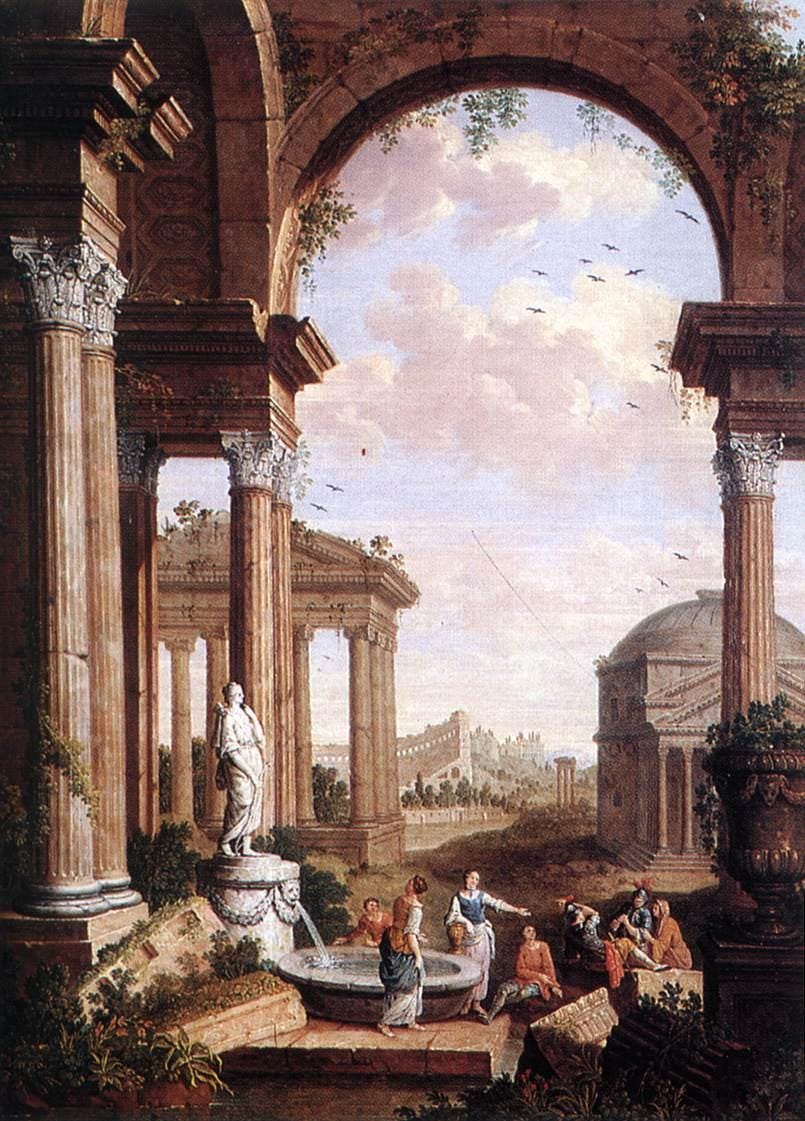
“You built all this?” I asked. “The town, and the roads, and the fort?”
The man before me had the cropped hair of a soldier, white now, but tinged with a faded rust, the colour of the plain’s dust. He smiled. “Not with my own hands. I supervised the work, and designed some of it. And of course the fort was simply rebuilt. But you know that. You saw it, thirty years ago.”
I sipped my wine. “I recognized it for what it was immediately. It was almost identical to a fort in my country.”
“The plans have never changed. We just adjust them to fit the terrain and the number of troops they are intended to house. But I did not realize there were any traces of Casil’s prior occupancy left in Ésparias.” He sat forward. “Was it just the fort?”
“No.” I told him of the mosaic floor at another fort, and the two roads. “And there is more: our only town was called Casilla. But we had forgotten who the builders were, although the faint memory of an eastern empire remained in some parts of the military.” The elected emperor, the rituals of the soldiers’ god.
“Those buildings remained in use, and the roads? Your military maintained them?”
“Yes. Although not as skillfully as the Casilani regiments who have come in the last decades.”
“And are now withdrawing.” He spoke matter-of-factly. Wood crackled in the brazier.
“Leaving us with more roads and bridges and forts and towns,” I said. “Whatever happens to Casil, I doubt we will forget its empire again.” If we did, I explained to my host, then it would not just be the buildings that had crumbled, but all else we had done in the last thirty years. Once only the northern schools had kept the language and thought of the eastern empire alive. Now their southern offshoots did the same.
“I hope you can keep the knowledge alive,” he replied. “But even Casil, for all its written records, forgets its past. When as a young officer I expressed a wish to look for the ruins I thought should be present in these lands, my superiors laughed at me.” Did his voice hold a trace of bitterness? If so, it was replaced by triumph. “However, I was right.”
“Do you wonder how long your works will stand?” I asked. A presumption, perhaps, but it was on my mind. “All that you have built?”
“If Casil falls?” he asked. “If there is no one with the skill to repair and maintain our work? I have seen what will happen. The dust of the plain will cover the roads with and fill in the ditches. Mortar will crumble and walls fall. People will take stone away to use elsewhere.”
A life’s work, gone. “Doesn’t that bother you?”
A smile again, and again I could only call it triumphant. “Not in the least. One temple I restored was still a sacred site, after all. Perhaps the people had forgotten to whom it was raised; they had certainly forgotten who built it, beyond uncertain legends. But it still evoked awe and wonder.”
As it had in me three decades past, seeing it standing alone on the plain, its remaining pillars gleaming white. Ancient and sacred, a monument from a people forgotten, a people of skill and artistry.
“Do you know who built it originally?” I had wondered since first I saw the ruined temple.
“I know who commanded here, and oversaw its construction. A man named Sabinus; the librarians in Casil found me the records. But who shaped the pillars, carved the words, laid the stones? No. Those names are lost, like those of the soldiers who fought to take this land and made it possible for Sabinus to build a temple to honour their god. History speaks only of the few.”
“It will speak of you,” I said. “Surely.”
“Perhaps. Or perhaps it will speak only of the generals who conquered these lands, or of none of us, if—when—Casil falls. Memory and the written word are as fragile as this glass. But stone will outlast all.” He held up his wine cup, his hand nearly steady, regarding me thoughtfully. “You are returning home?”
“I plan to.”
“Then may I entrust you with records? Copies of some of what I have written in my years here. Take them back to your scholars. They may be safer there.” This time the smile held an ironic edge. “I am vain enough, it appears, to wish for a better chance to be remembered.”
“I can take them.” The brazier held only coals now against the cold of the desert night. I hid a yawn. “Forgive me.”
“Not at all. You must be tired after your travels. My steward will show you to your room.” He pushed himself out of his chair to extend a hand. “I am glad to have met you. I doubt I will see you before you leave. I am an old man, and mornings are not easy for me, but the records will be waiting for you.”
I rose, stepping closer to the desk to take his hand. The drawing on the desktop caught my attention. A memorial stone, the words clear. Beside it lay the belt knife he would have carried all his life.
His hand in mine was cold. “Thank you,” I said.
Stone outlasts all. I had no doubt, wishing him good night, of what news would await me in the morning.
An excerpt from an early draft of my eighth (and final) novel in the Empire’s Legacy series, Empire’s Passing. The scene, lightly modified, remains in the published version.
Do you find this world intriguing? Consider subscribing to the serialized version of Empress & Soldier, an earlier book in the series (where you’ll meet younger versions of this architect/engineer and his guest). https://mlthorpeauthor.substack.com/s/empress-and-soldier
Beautifully written. Words are truly the artist painting a picture that nothing is cast in stone! New worlds emerge from ancient discoveries. People are the messengers.