
This Writer's Diary
It's May. This Birder's Diary might be a better title.

Monday, May 4
A bubbling song; a flash of orange and black, the colours of the Calvert family, the Barons Baltimore. The orioles named for the family that began the Maryland colony are back, singing from treetops in the sun this morning. Over the tree swallow field are — tree swallows, swooping, chittering, checking out the nest boxes.
Another song, a different rise and fall of notes, from the trees near the beaver pond. In the understory are two male rose-breasted grosbeaks. On the forest floor, white-throated sparrows scratch and chirp. The day is almost warm at 9:30 am.
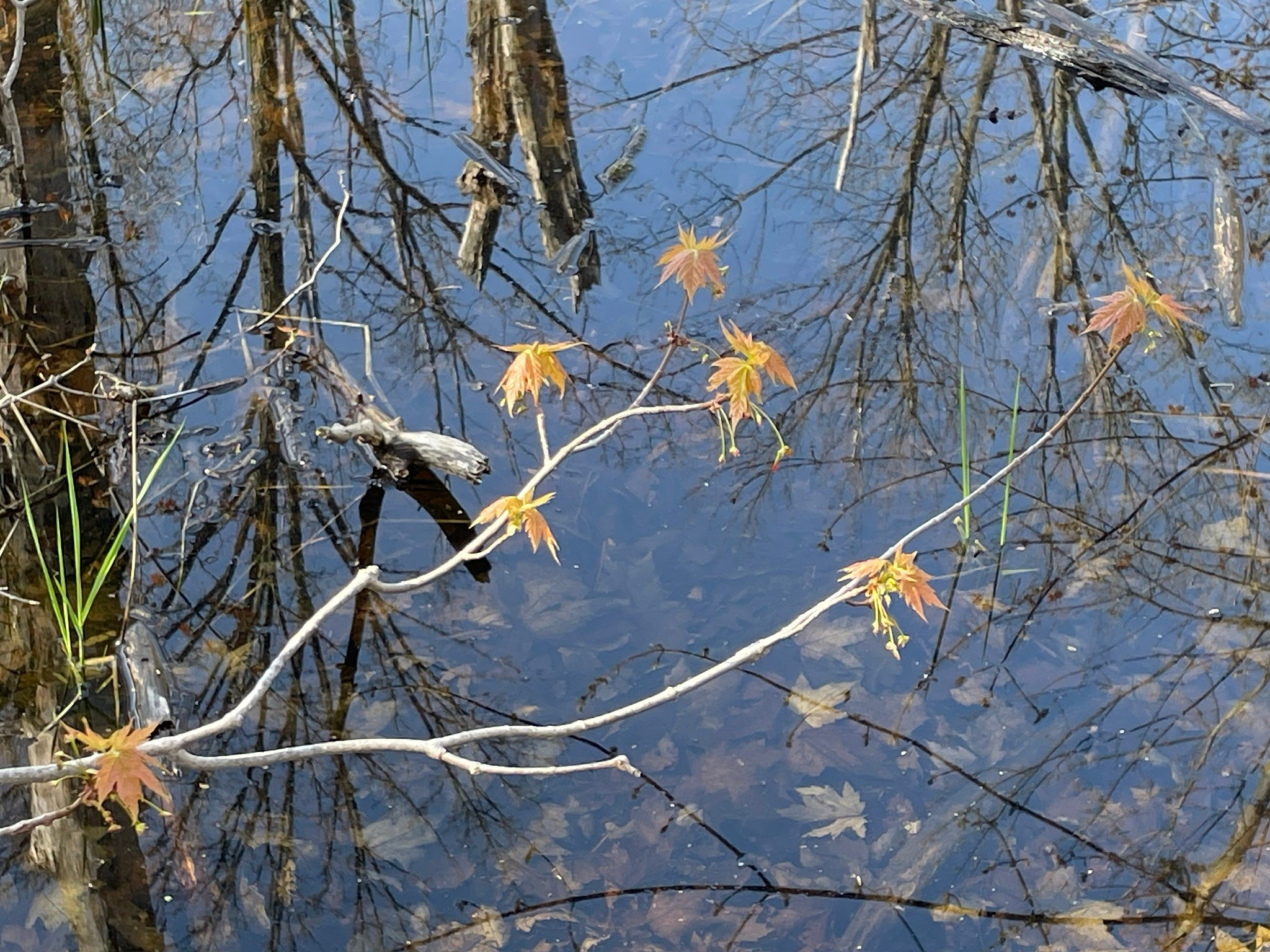
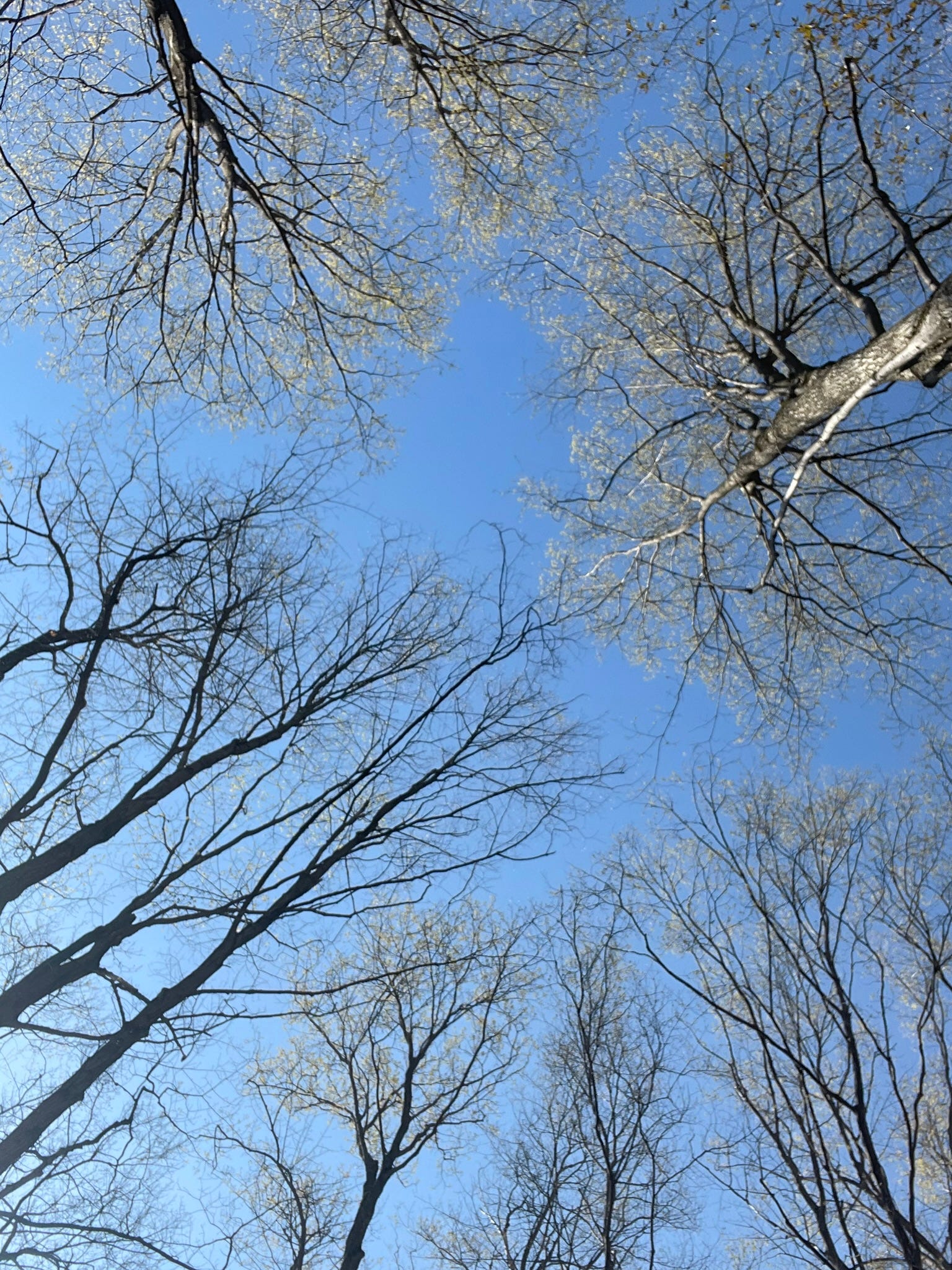
A red-bellied woodpecker excavates a log in the maple swamp, its red nape brilliant in the sunshine that still reaches through the lattice of branches, leaves just barely unfolding.
Thursday May 7
On a few days each year I wake simply not wanting to write, or edit, or work on anything that has words. Today was one of them. The morning was sunny, if cool, and the forecast for mostly-sunny all day. So I went birding.
There was a frost warning last night, although cloud and rain moved in and so no frost. This can bode well for a songbird ‘fall’, where they drop down for shelter and food when migration conditions deteriorate. I didn’t see much evidence of that. A lone warbling vireo sang in the Arboretum’s maple swamp1, the only obvious new arrival.
By the beaver pond, I found two more vireos, red-eyed and blue-headed, and on my second pass through the maple swamp, two palm warblers, just about at eye height.
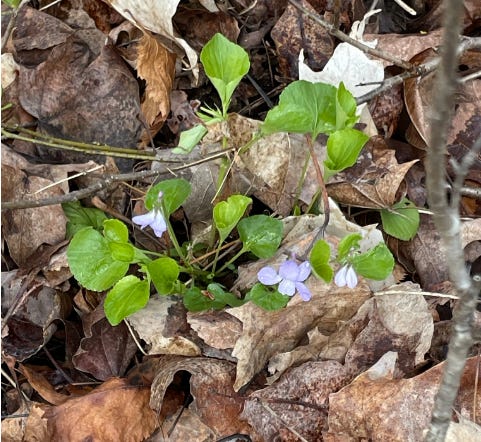
Violets are flowering now on the forest floor. Baltimore orioles serenade the world throughout my walk.
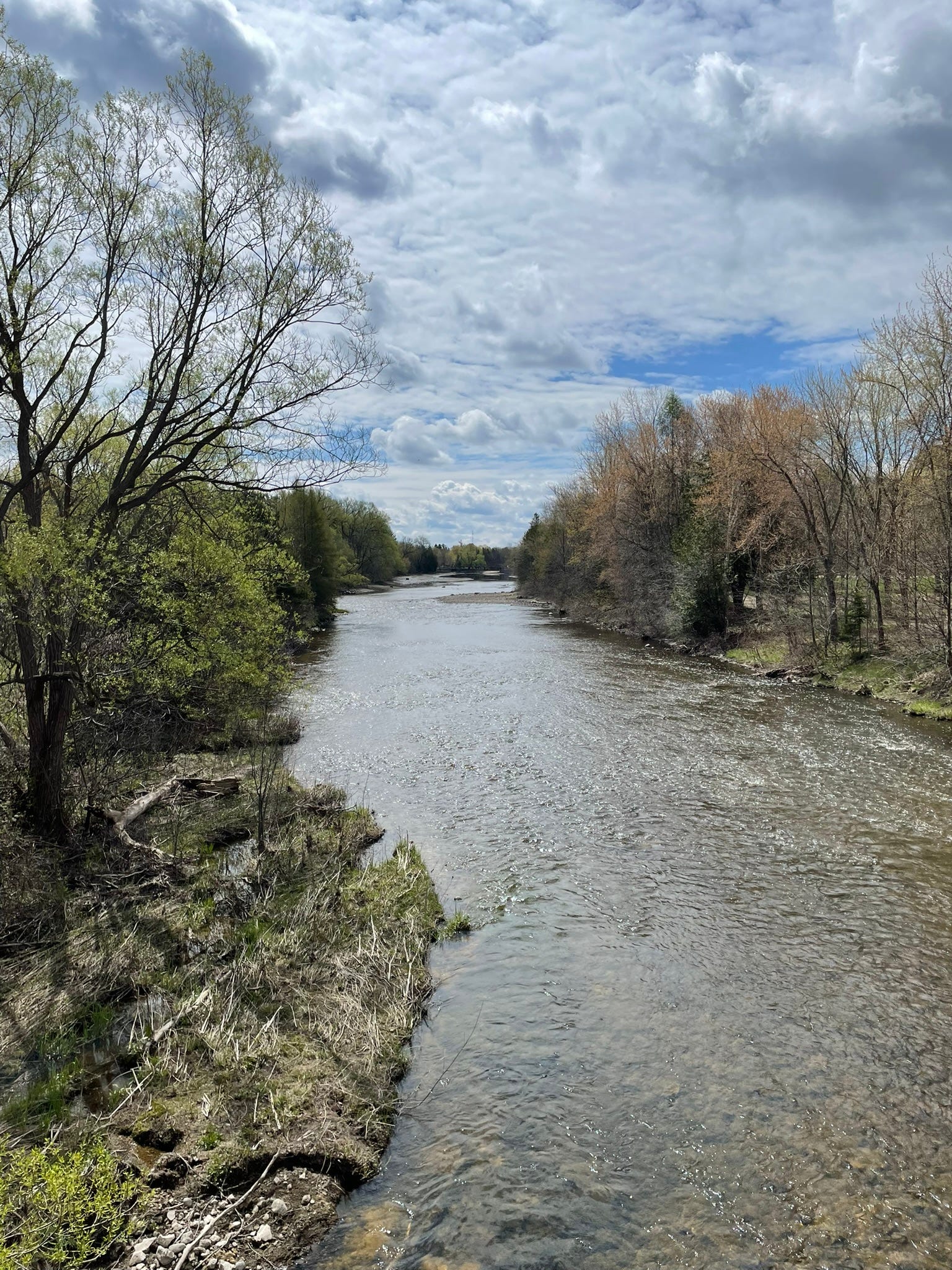
I leave the Arboretum for a walk along the Speed River, hoping for shorebirds and swallows. One killdeer calling; barn swallows and northern rough-winged swallows over the water. A rose-breasted grosbeak bubbles in the trees along the bank.
Regardless of the forecast, it begins to rain about 12:30 while I’m at my last birding spot at the Grand River, just after I identify cliff swallows flying over. As I start the car to leave, I see movement and a flash of white in the grass under a clump of evergreens. White-crowned sparrows, the first of the year.
Friday May 8
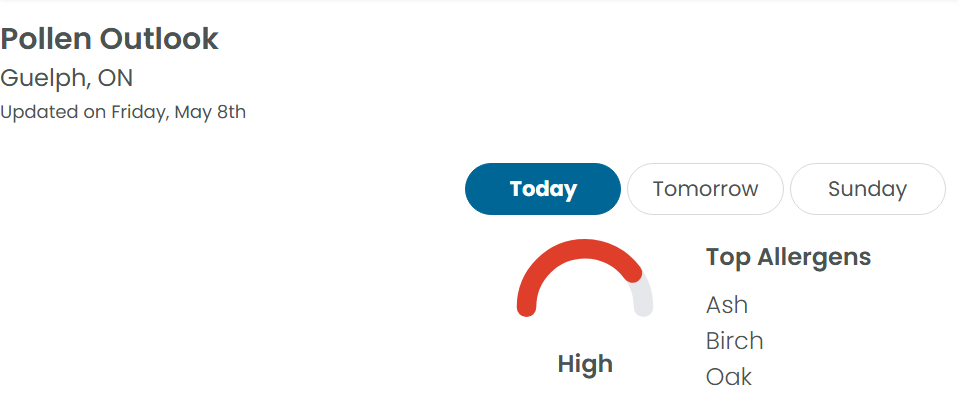
And don’t I know it! Tree pollen is my bugbear. Puffy eyes, scratchy throat, sniffly nose.
Regardless of the anti-histamine fuzziness, I wrote the first draft of a difficult explanation this morning — how an astrolabe is used to interpret coded messages — that’s both short and comprehensible. I bounced it off a writer friend when it was drafted, to ensure I wasn’t writing gobbledy-gook. She assures me it’s believable — which is all I want. Is it 100% accurate? Probably not, but this is historical fantasy set in a different world, not historical fiction. Things can be different, a little. I’ll add a line or two more of explanation when the character Luce shows her brother Cenric how it works, and that, I hope will do.
In first draft form:
Di Bonacci’s book lay open on the table in Luce’s private rooms. She’d gone back to it: the key to the code embedded in the star charts – for that was what they must be — had to be in it somewhere. She’d leafed through the book twice; had almost put it down in frustration when her fingers alerted her to the thickness of the back board. It felt padded, as if there was something between the end paper and the wooden cover.
Luce took a scalpel from the set of surgical tools that lay in their case on a shelf. Carefully, she made a clean cut along the endpaper. Below it was a folded sheet of vellum. She spread it flat on the table to read the instructions.
So simple, and yet impossible for anyone without the right tool — Rainard’s astrolabe — to break.
At its heart was another substitution code, this time using the hours of the day marked on the outer rim of an astrolabe. Twenty four hours; twenty four letters in the Heræcrian alphabet. That could be deciphered easily, were that all. But it was far more elegant. On the inner plates of Rainard’s astrolabe were forty star names. The star chart in King Lysas’s letter had a series of observations, a list of star positions at various hours in the day. Inserting the plate for Selekosia into the astrolabe, rotating the plate so that the star mentioned pointed to the hour given in the chart, and applying the alphabetic code – unlike the one used for the lists, this one was straightforward: the first letter of the alphabet was the first hour of the day, and so on — gave the recipient the message.
But you needed the correct astrolabe, with the correct plates for various cities, and, those plates needed all forty stars. Attempting this with a plate with fewer stars, or the wrong origin city, would simply not work. Luce’s own astrolabe only had thirty-three stars, and many astrolabes – those used for calculations of heights or distances – had degrees marked, not the hours of the day. Rainard’s had both. Luce had thought that odd, the first time she’d examined his instrument. Now she knew why.
The astrolabe is an important motif in the story: a tool from the pinnacle of medieval Islamic mathematics and astronomy brought west, used for understanding the movement of the stars and planets, for measuring distances and heights, for navigation, it represents not only all the learning that is threatened by destructive invasion (the main plot) but also the need for all my main characters to choose and chart the paths of their lives under this threat. It suggests the rational, logical choices, juxtaposed against the music and poetry that also weave their way through the story: the conflict between head and heart, if you like.
I have a meeting downtown to discuss a book launch. We sit on the walled patio of a cafe. I look up at the patchy blue sky. The first chimney swift of the year flashes over.
Saturday May 9
It’s not allergies. Or, it’s not allergies alone. I have a cold. Pooh. Birding with dripping eyes and nose is not possible, unless I identify by song only. (Which I might.) Colds should not come during spring migration.
On the writerly side of things, here are more reviews of books authored by contributors to the upcoming Courage anthology.
https://alluringcreations.co.za/wp/sister-rosas-rebellion-by-carolyn-hughes-the-weight-of-silence/
https://alluringcreations.co.za/wp/the-queens-scribe-by-amy-maroney-ink-and-power/
Here’s an odd thing. I was standing no more than 10 meters from that loudly singing warbling vireo. I had the Merlin app on. It picked up the distant osprey; the red-breasted nuthatch, the chickadees, the red-winged blackbirds . . . but not the warbling vireo. Why?
Your place sounds like heaven on earth, at least bird-wise. We're lucky to live in an area with many well-established trees and birdsong even as winter knocks on doors.
I appreciate so much you sharing the links to those book reviews :) Such a pleasure.
Best wishes and days with low polen count.