
Traps
The past is one.

“I’m fine, Dad. You can leave.”
He could see she wanted him to, wanted to start her new life at Acadia. He’d been pleased when she’d chosen this university, the small town of Wolfville better suited to her than a big city, in his mind. And pleased, too, that she’d chosen Nova Scotia.
“OK, Pen. You know I’m staying in Windsor tonight. If you need anything, call me.”
“I will.” She glanced over her shoulder. Kids, in singles and pairs and groups, were heading to the Student Centre. Some kind of orientation event. “I need to go, Dad.”
“I know.” He held out his arms. She came to him, gave him a long, tight hug.
“I’ll text. Bye!”
He watched her walk away, calling to someone to wait up. She made friends easily, a trait he didn’t have. Then he turned back to the car. He’d drive into Windsor, drop the U-Haul trailer off, find his motel. First, though, he should call his wife.
She picked up on the third ring. “How’d it go?” she asked.
“Good. The room’s nice, a bit small, but Pen liked it. She’s off to an orientation talk, so –” He told her his plans.
“When do you think you’ll be home?”
“Three days?”
“Aiden’s got a game on Monday,” she reminded him.
“I’ll be there.” They talked a bit more, nothing important. Aiden had cut the grass; she was going to a movie with a friend Friday night, after work. “Bring Aiden a sweatshirt,” she reminded him. “Get an XL. That landscaping job’s really made him fill out.”
They – she and Aiden – wouldn’t really miss him, this week before Labour Day. His son’s summer job and his friends kept him busy; apart from the ball games, they rarely saw each other. Not like it had been with his dad, out on the scallop boat all summer, and helping out weekends during the school year. Until he’d gone east for university, anyhow.
He drove the short distance into Windsor, dropped off the trailer, found his Super 8, three minutes down the road. A Tim Hortons and a McDonald’s close by; they’d do, for tonight. The drive from Ontario had been tiring. Penny could drive, but not with a U-Haul trailer behind the car. He’d find a place that sold beer, grab dinner from the drive-through, and settle into the motel for the night. Watch some tv, and think about tomorrow.
After the Big Mac and fries and a Keith’s IPA, he opened his laptop, brought on the premise he might do some work on the trip. Maybe tomorrow night, he told himself. Google Maps told him the driving time: nearly four hours to Advocate Harbour, if he took the scenic route.
His phone bings. A text from Penny. Hi, Dad. Thanks for driving me out. Safe drive home. Followed by a heart emoji.
He texts back: Have fun. Don’t forget to study. Love you. The same heart emoji.
And that’s that. In the morning, he’ll begin the drive home.
The Super 8 has a breakfast bar, but he goes to the Tim’s anyhow, for coffee and a breakfast sandwich, before heading out. East first, until he turns north, across the Mantau Bridge and onto NS 215. Farmland here, pasture, in this fertile land between rivers. Fields give way to bush, and back again. Old clapboard houses, newer aluminum-sided single-stories, white churches. Finally, at Cheverie, he can see the water of the Minas Basin. He stops, like a tourist, to look.
Nearly three hours later, after a quick break in Truro for a second coffee and a washroom, he stops at a pier where fishing boats moor on the tidal creek. Where his dad’s boat tied up, back in the day. Thirty years past, still in university, he came to give his father’s ashes to the water here. He watches the creek move, flowing out. When the tide turns, it’ll race back in.
Scattered houses along the road, the church they didn’t attend. By the Irving sign is a visitor information kiosk. A big bike rack, picnic tables, an oversize model of a lobster trap, dwarfing the ones lining the parking area. The RiteStop shop, and a restaurant.
He goes in, sits. The waitress brings him a menu. She’s about his age. He doesn’t recognize her. He orders seafood chowder. “Passing through?” she asks, bringing the food.
“Brought my daughter out for university. Acadia. I’m heading back now,” he tells her.
“Doing a little sightseeing on the way? Where’re you from?”
“Ontario. Near Toronto.” He smiles. “But from here, originally.”
“Nova Scotia?”
“Yes, but here. Advocate.” He introduces himself. “My dad fished.”
She shakes her head. “I’m from Southampton. We moved here a few years back. My husband works at the provincial park up the road.”
She goes to serve two more customers; locals, by the way they’re dressed and their speech. Again, his age, more or less. They don’t look his way, deep in a friendly argument about the Red Sox’s chances of the pennant. He knew them once, he’s fairly sure.
He eats his lunch, pays the bill, leaves a decent tip. Outside, he walks over to the information board. Reads about scallop fishing, and tides, and the park. Then he fuels up and continues driving.
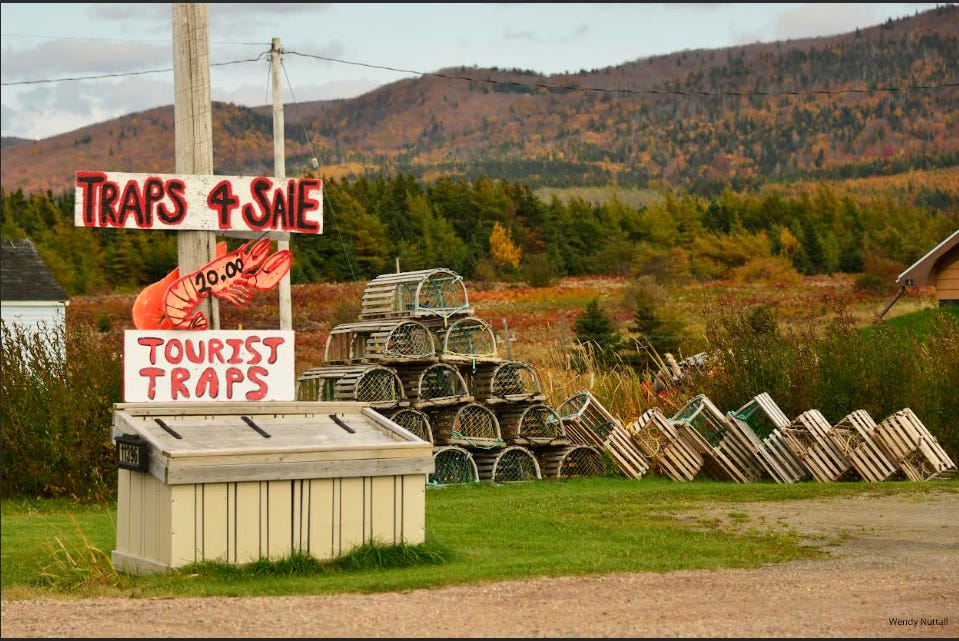
Just up by the tiny post office he sees the pile of lobster traps, and the sign. Traps for sale. On a cut-out wooden lobster, $20.00. A second sign reads Tourist Traps. The air is salt, the breeze off the water chilly, carrying the scents of tidal mud with it. High overhead, an osprey screams.
He looks at the pile of traps again. Remembers helping out on winter weekends, the weight of them, the rocking boat, the taste of salt spray, the numb fingers and frozen wind-whipped tears.
He leaves a twenty dollar bill in the honesty box, tosses a trap into the back seat of the car. Ninety minutes to the TransCanada. Two days to home, if he takes it easy.
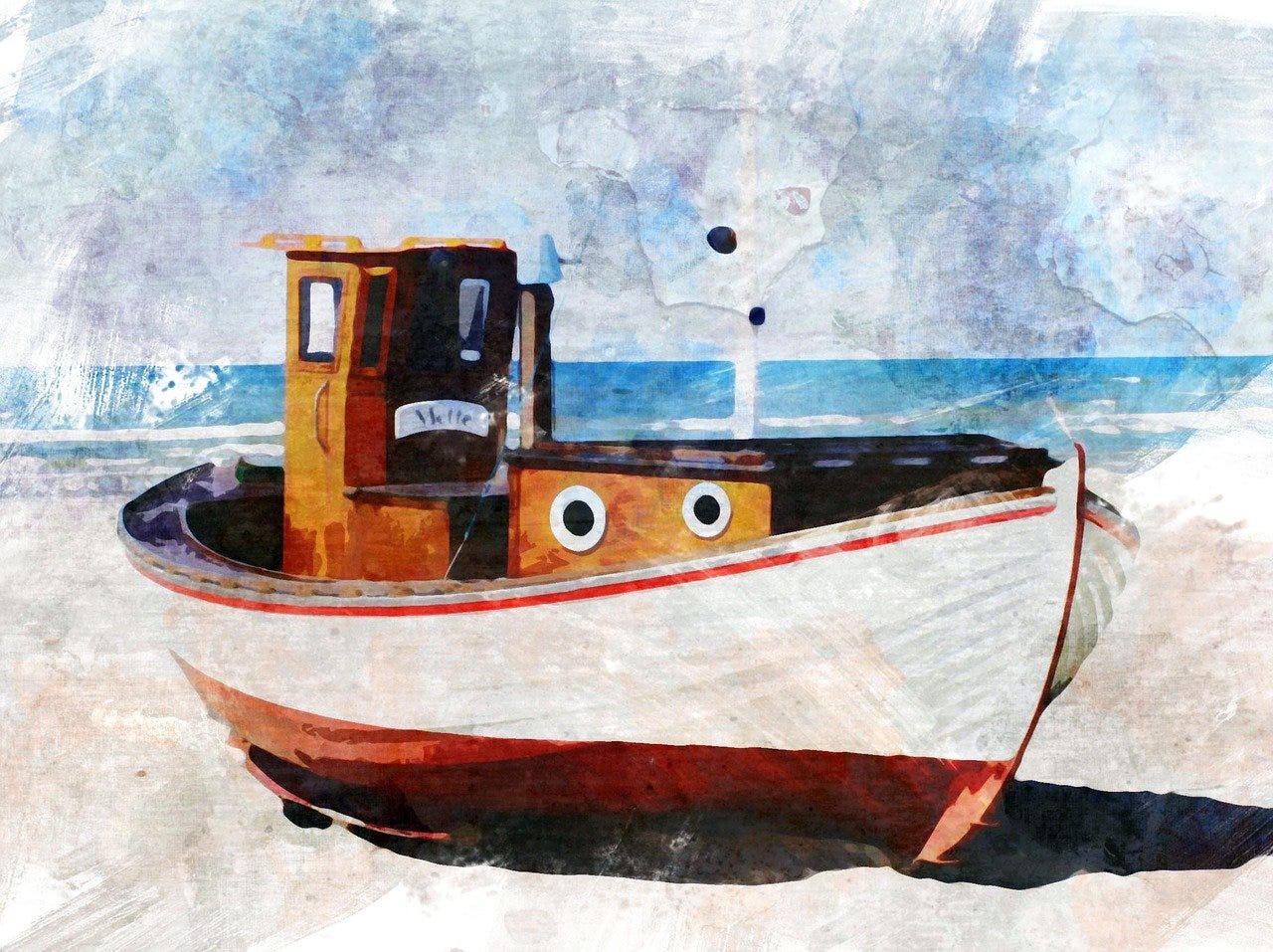
I usually leave the songs for the biweekly This Writer’s Diary, but this was in my mind while I was writing this story.
My Empire’s Legacy series can be found in e-book format only here:
https://scarletferret.com/authors/marian-l-thorpe
For paperbacks or other ebook retailers for all my books, including my short story and verse collection Beyond the Wall, follow this link to your favoured on-line store.
I really enjoyed this story, and it was fun to look at how I could relate to some details (but perhaps not others)!
My dad was a second generation city kid and decided to move to the mountains, where he met my mom. The mountain folks are very much a minority in my state—people forget they're even a part of it.
Myself, I moved from the mountains to the city my dad left, then further west where all the fishermen live. The boats are just half a mile from my house, so it's a life I see every day yet don't understand.
At the same time, I do understand family farms. Lots of similarity there in terms of kids who either leave or stay involved. My daughter's still young, but when she's old enough I very much wonder what kind of direction she'll choose.
The past can be a trap indeed, but I suppose I'm okay with that.
I liked the subtle tone to the story, and its gentle pace. Very appropriate for a fishing story.