
Deception
He looked at the boy closely. “Who are you?”

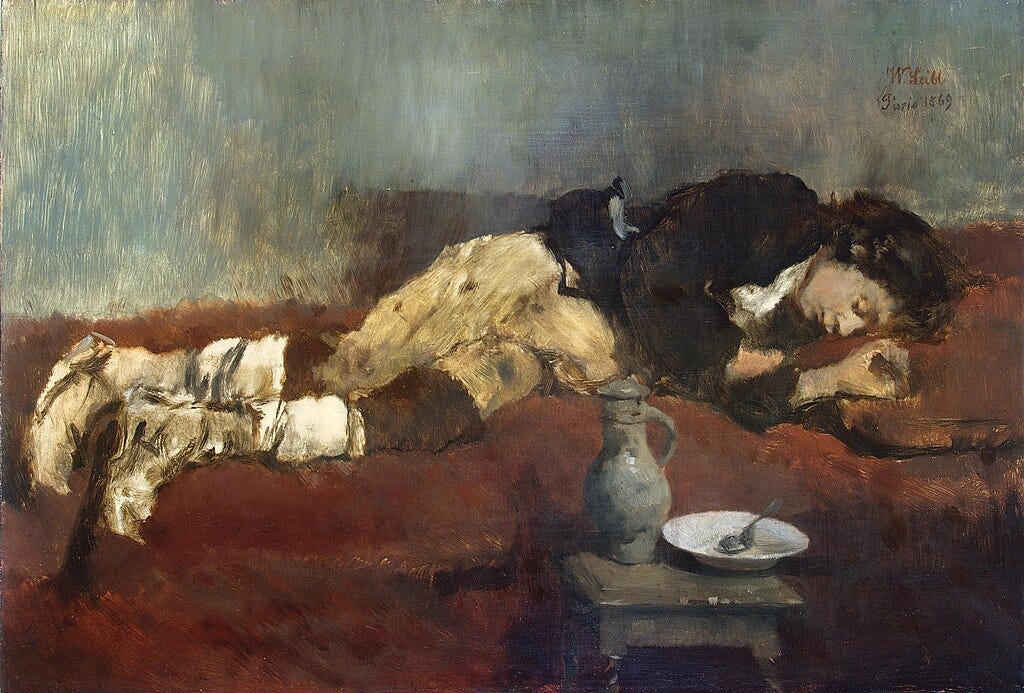
A slightly modified excerpt from Empire’s Reckoning, the sixth title in my series.
We reached the guardpost on the Sterre closest to Dun Ceànnar at dusk. In mid-afternoon we’d stopped in a sheltered spot, and with Bjørn’s help I’d cut off most of my beard and trimmed my hair. Gregor would know me. Just before we came into sight of the dyke and ditches, I removed my cloak, adding it to the pony’s burdens. Better it be clear I carried no weapon, even if it meant I shivered.
A shouted command stopped me a distance away. I could see the silhouettes of two archers on the dyke, bows drawn. “Who are you?”
“A traveller, with news for Lord Gregor, your commander,” I called back. “Tell him this: war in winter sends sorrow soaring.” The code we had decided on: Gregor’s idea, remembering Jordis speaking the words of Halmar’s poem at the Ti’ach so long ago.
“You will wait there,” the soldier said. Bjørn had been walking beside me. I pulled the cloak back off the pony, wrapping it around the two of us. I positioned the pony between us and the steady breeze. Bjørn leaned against me, and together we remained a bowshot’s distance from the border with Linrathe, as the moon rose in the night sky.
I’d had time to think, both over the winter and then walking the long miles south from Dugarstorp. I knew what I had to do, and what I might do afterwards. But before any of that, there was Bjørn. I had to take him to Ruar first.
We’d waited about two hours, I estimated, when a voice called out of the dark. “Come.” We crossed the bridge dropped for us over the ditch and through the guardpost gate, Bjørn stumbling with cold and drowsiness.
“Wait, please,” I said to the soldiers escorting us. I picked up the boy and put him on the pony’s back. “He’s tired.” They didn’t argue. He looked younger than his nine years, short and slight. Something to be used to our advantage.
Gregor met us at the headquarters. “Leave us,” he said to the guards, and nothing to me until we were inside and the door closed. “I’d given you up for dead, Sorley.”
“I wintered north,” I said, moving closer to the fire. “Bjørn, come here.” The boy did as I told him, crouching down and holding his hands towards the flames.
“Who’s this?”
“My son.”
“Didn’t know you had one.”
“Neither did I,” I said, grinning in what I hoped was the right way. “I hadn’t been home since I was eighteen.”
“Peasant-born, then?” Gregor asked, pouring ale.
“But a bright lad,” I said. “I’ll find a place for him somewhere.” I’d decided the lie was necessary; even the most loyal officer could let something slip. Only Ruar had to know, for now.
I slowly sipped ale. Bjørn slept in a chair. Food had been brought, and the boy had eaten a little before his eyelids had drooped. “He’ll make a soldier, if he can sleep that easily anywhere,” Gregor commented. “You’re going to Dun Ceànnar in the morning?”
“Is all well there?”
“Aye. The Teannasach’s well, and his cousins too.”
We talked a while longer, until I began to yawn. I picked up Bjørn, who barely stirred, and carried him to the bedroom prepared for us, and we slept in comfort under woven blankets and furs until well after the usual breakfast time the next morning. Then I found the bath house, and by the time the sun was high, we were cleaner than we had been in weeks. Or perhaps months.
Even the pony had been groomed, and its rough harness cleaned. A horse waited for me as well. I wondered what Gregor had told the soldiers who had brought us over the Sterre last night, but when he came to bid us farewell, I didn’t ask.
“Bjørn,” I began, when we were away from the Sterre and not yet being followed by Dun Ceànnar’s guards. “We are in Linrathe now, you understand?” He nodded. “I am taking you to this country’s leader, the Teannasach. Only he, and perhaps his advisors, will know who you really are. To everyone else, you remain my son. Your mother was a girl from Gundarstorp.”
“Can I say she was Irmgard?” he asked.
“It would be safer to call her Irmë.”
“I’ll try to remember,” he said. He looked up from the pony. “Am I going to live with the…the Teannasach?”
“Perhaps. Or perhaps you will go to a school. That might be better. You should be well educated.”
“I can’t stay with you?” I heard just a hint of plaintiveness in the question.
“No,” I said gently.
“Why not?”
“Because,” I said, “I don’t know where I’m going.”
~
We were in luck; the Dun Ceànnar guards recognized me, and so there was no tiresome questioning, or searches, and we were in Ruar’s presence by early afternoon. He’d grinned hugely on seeing me, and the embrace that accompanied the kiss of welcome had been enthusiastic. His cousin Oisín’s was more subdued, but he too was genuinely happy to see me.
Ruar turned to the boy. “But who is this?”
“My son,” I said, with Oisín in the room. “Bjørn.”
I would not be the first lover of men with a child, or several. Ruar gave me a level look. “Oisín, please leave us.”
When his cousin had gone, he looked at the boy closely. “Who are you?”
Bjørn glanced up at me. I nodded. “You can tell the Teannasach.” I wanted the boy to speak the words, to keep his true identity clear in his mind.
“Bjørn, prince of Varsland,” the boy said, pride evident. “My father was Ǻsmund; my mother is Irmgard.”
“You are the younger prince?” Ruar asked. He’d shot me a look, but he addressed Bjørn.
“Yes. My brother Bryngyl is the heir. I have been sent here for safety.”
“Who knows he is here?”
“My brother, and the Harr of Dugarstorp, and perhaps their wives.” I explained how we’d spent the winter, and how we’d travelled.
“You have no objection to the deception continuing? That he is your son?”
“None,” I said. “I’d be proud if he was.”
“Then,” Ruar said, coming to a rapid decision, “he shouldn’t stay at Dun Ceànnar. Where would you send him, were he truly yours, Sorley?”
“To the Ti’ach na Asgaill,” I said. I’d noted Bjørn’s quickness with numbers, his ability to estimate the number of sheep in a flock almost at a glance; how easily he divided up food for a given number of days.
“Then Asgaill will have him. But I would like him to stay with me for a few days.”
“Of course.” Why not? It would delay me only a little, and it would be a valid postponement of what I had to do next. I hadn’t quite told Bjørn the truth when I’d said I didn’t know where I was going: I did, but it would be briefly. After that I truly had no idea.
Ruar called for food then, and while we ate I explained to Bjørn what his life would be like at the Ti’ach. He nodded solemnly. “Like the schoolroom at Dugarstorp, but bigger.”
“Exactly.”
“Can I have the pony?”
“Yes.” The shaggy animal was the right mount for a peasant-born boy acknowledged by his noble father. He’d need something better in a year or two. I’d have to arrange for that before I left.
In the time period that my books parallel, the early Middle Ages, acknowledging a child born out of wedlock “was not much of an issue for the elite.”1 So Sorley’s acknowledgment of his ‘son’ is not unexpected. But a child unacknowledged by its father — well, as the same article says: “The birth of an illegitimate child was … a significant burden for their mothers whose reputation was ruined.” For another character in my series, this hangs heavily over his life, especially given the rumours of who his father was.
Find Empire’s Reckoning - and all my books - here, or from all the usual on-line places.
Check out some interesting free downloads in a variety of genres here. It includes A Divided Duty, an introduction to the main character of my first trilogy and the fictional early-medieval world of the books.