
The Phoenix
An excerpt from Empire's Passing.

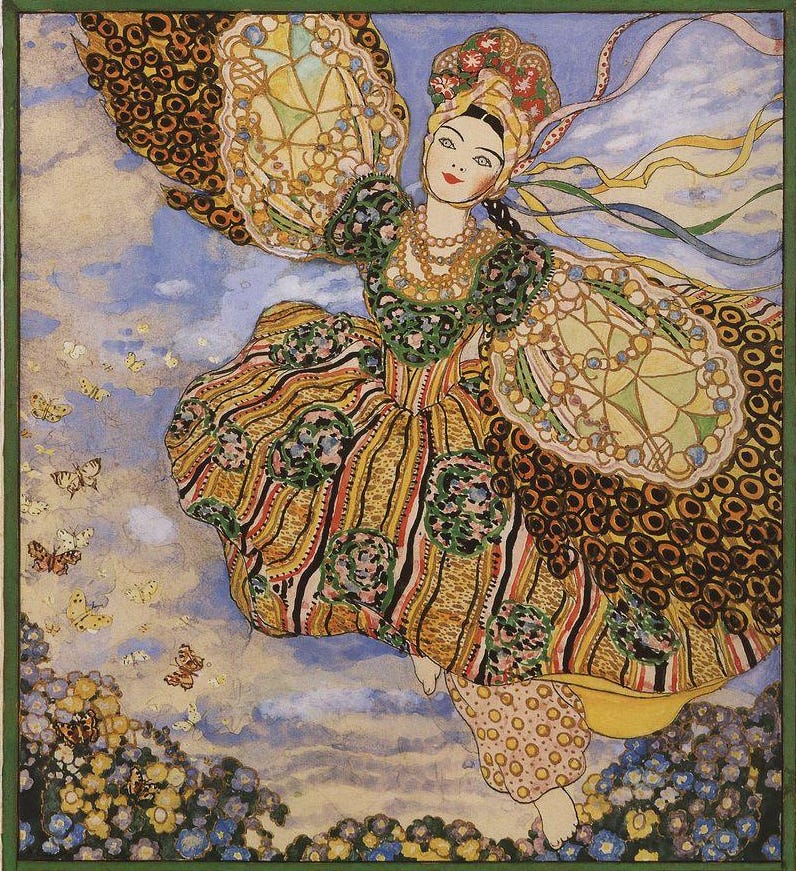
This scene takes place not long before Flight, published here on March 8th, in a city somewhat like Rome about to fall to a conquering army.
“Something is happening.” Vita spoke sharply. She stood at a window, the shutters open now. I could hear voices and movement. I went to stand beside her. People were passing through the square in both directions, rapidly. Families, women, men.
But not equally. Families and men and women moved towards the river, carrying bundles and bags. Who walked or ran the other way were almost all men; men and older boys.
Marius had joined us. “Rumours fly through this city like litter in the winds before a storm,” he said. “But do you see? Some are fleeing. Some are going to the palace, or the gates, to stand against the enemy.”
“Do not!” So there had been discussion. Marius touched his wife’s shoulder.
“I will not. The Empress made me promise, and so did you. I will honour those promises.” He watched the scene below for a few minutes. “It is time, I think. Lena, can you be back here in two hours, or fewer? We must get the young Empress and her children to the ship, and that may have its difficulties.”
“I can.” Could I? If Colm was back at the palace. Constyn must be; his guard would have returned immediately if they sensed trouble. But surely the physicians would not have sat calmly discussing remedies and techniques while the city erupted?
“Then go.”
~
The river of bodies, once I edged and sidestepped into the right stream, carried me close to the palace. I kept a hand on my secca. One or two men told me to go back; more frowned, seeing me, but I ignored them.
Then, with some distance yet to travel, the flow of forward movement slowed and stopped. Men stood fifty deep or more, spread between the palace and the Arénas, a wall of humanity come to stand—and fall—for their Empress and their city. Men in rich tunics and threadbare, men who smelled of lavender and those who reeked of sweat. Admirable, brave, foolhardy—any or all, but I had to get through and into the palace.
“Messenger!” I shouted, pushing between two men. “Imperial messenger. Let me through!” They stepped apart. I continued shouting, forcing passage. Someone trod on my foot, hard; I winced, and shoved.
“What the fuck?” He turned, hand raised.
“Messenger,” I snapped. The man beside him grabbed his arm.
“Get out of her way, idiot.” He raised his voice. “Imperial messenger! Clear a path!” Whoever he was, he’d used his voice to reach crowds before, both in volume and the note of authority. People moved out of my way.
He stayed behind me, shouting his commands, until I was free of the mass of men. “Thank you,” I said, over my shoulder, before I ran for the entrance.
The guard knew who I was. “You are to go to the Empress.” I nodded, catching my breath.
“Is the physician Colm back? Or the young prince?”
“Neither, that I know of,” she answered. “But there are many doors.”
~
I had seen Eudekia only a few hours earlier, but in those hours she had become gaunt, her eyes huge above cheekbones that pushed sharply through the stark, pale skin of her face. Was she ill? Was that knowledge behind her decision not to leave Casil? I had no right to ask, and what did it matter now?
She’d been watching the crowds below. “Are the arrangements made?” she asked.
“Yes. We leave today. Two hours, Marius said, at most.”
“I have the box,” Junia said from the other side of the room. “It’s with your bags and weapons. Is there anything else you need?”
Time, I thought. Time to try to make sense—a little sense—of everything that had happened. But I didn’t have it.
“Is Colm ready? And Constyn?”
“They have not returned.” Eudekia said.
“What?” Fear, like the bite of a blade in my gut. “Where are they?”
“Perhaps looking for a way through the crowd,” Junia said.
My heart spoke before my head. “I won’t leave without them. Marius can take Rosale to his country, or she can go to Ésparias alone.”
“This is not your war, Lena,” Eudekia said. “An army will descend on Casil soon; they are advancing on us now. An army that will cleave history as lightning cleaves an ancient oak. Men will write of the time before Casil fell, and the time after. Go home to shape the time after. That is your work, the work you have planned for the past three decades.” Unbelievably, her lips curved in the slightest of smiles. “It was never sedition. I told Cillian that, and your daughter.”
“I won’t leave without them,” I repeated.
“He is a physician. They are unlikely to harm him,” Junia said.
I had lost Cillian. Druise was dead. I couldn’t think about what Sorley might have done. Too many people I loved had died. I would not leave Colm behind, or Constyn.
Not just for myself, but for Cillian, who had predicted this day, and worked to shape a future to follow. For Druisius, who had given his life to save Gwyllar. For Gwenna, who wanted her brother at her side, and for a country who needed them, the man Colm was and the man Constyn would become.
“This matriarch,” I told the Empress, echoing her earlier words, “is going nowhere without her son.”
~
I paced, fear making me nauseous and at the same time closing my throat, constricting my breathing. Sweat pricked the back of my neck and my chest. Outside, the crowd grew larger. Eudekia watched them, silent.
“Look,” Junia murmured. “The statues.”
The crowd was parting for a procession of sorts, men bearing marble images on their shoulders.
“They are brought from the temples only at times of great importance,” Eudekia said, without turning.
“Casil is honouring you.” Junia came to stand beside her. “Should your people see you, Empress?”
“Of course,” she said. “Come.”
She turned, walking rapidly. We followed, out of the room and along a corridor. “Bring torches, and what is needed to light them,” she said to us. Torches? It was full daylight. But she was the Empress.
At a door that led out the roof of the lower floor, Eudekia walked out into the sunshine. She stepped to the low wall and raised her arms. Shouts from below, and then cheers.
“Light the torches,” she said to Junia.
Eudekia held the torches high, then lowered and crossed them in front of her, so the flames appeared like burning wings folded low, holding her in their embrace. She left them there for a dozen heartbeats, more, then raised them again. What was she doing?
Below men had knelt. Others shouted, and one cry was taken up, spreading through the crowd like fire: Casil! Casil! And interspersed, Casillia! Casillia!
I had called myself a matriarch a few minutes earlier, but it was a false claim. Eudekia was one. Mother and grandmother, yes, but mother to her city and her people, too, the spirit of Casil made flesh: Casillia. If Casil must die, so would she, but like the phoenix, Casil—and its spirit—would rise again.
We cannot shape the circumstances to fit our lives, only our lives to fit the circumstances. What defines us, as men and women, is how we respond to those circumstances. Casyn’s words. I had been eighteen. Tears rose in my eyes: tears for the inevitable ending; tears for all the deaths there had been and those yet to come, for the loss of a magnificent, shining city, and most of all for this courageous woman who had responded with strength and grace and determination, to the circumstances that fate had chosen for her.
She stepped away, handing the torches to Junia, who held their burning ends below the wall, hidden from the crowd. “If any survive,” Eudekia said, “they will tell stories, and with each telling the story will change, until even the teller believes he saw a woman become a bird consumed by flame.”
“As you meant it to be,” I said, oddly reluctant to speak to her, as if she had become something too exalted to be addressed.
“As I meant it to be. And now come. I cannot be seen again.”
Like what you read? Donations for my local foodbank are gratefully received.
Find all my books at https://scarletferret.com/authors/marian-l-thorpe
There's a lot of intense emotion packed into this excerpt.