
This Writer's Diary
November 28, 2025

As I write this we are in the first day of a multi-day snowstorm. We’re not getting much snow yet, only a few centimetres, and the temperature is hovering around freezing, but the winds are fierce. I’m glad I’m not on the roads. North of us, if the radar map is to be believed, the snowfall was greater, and the winds just as bad.
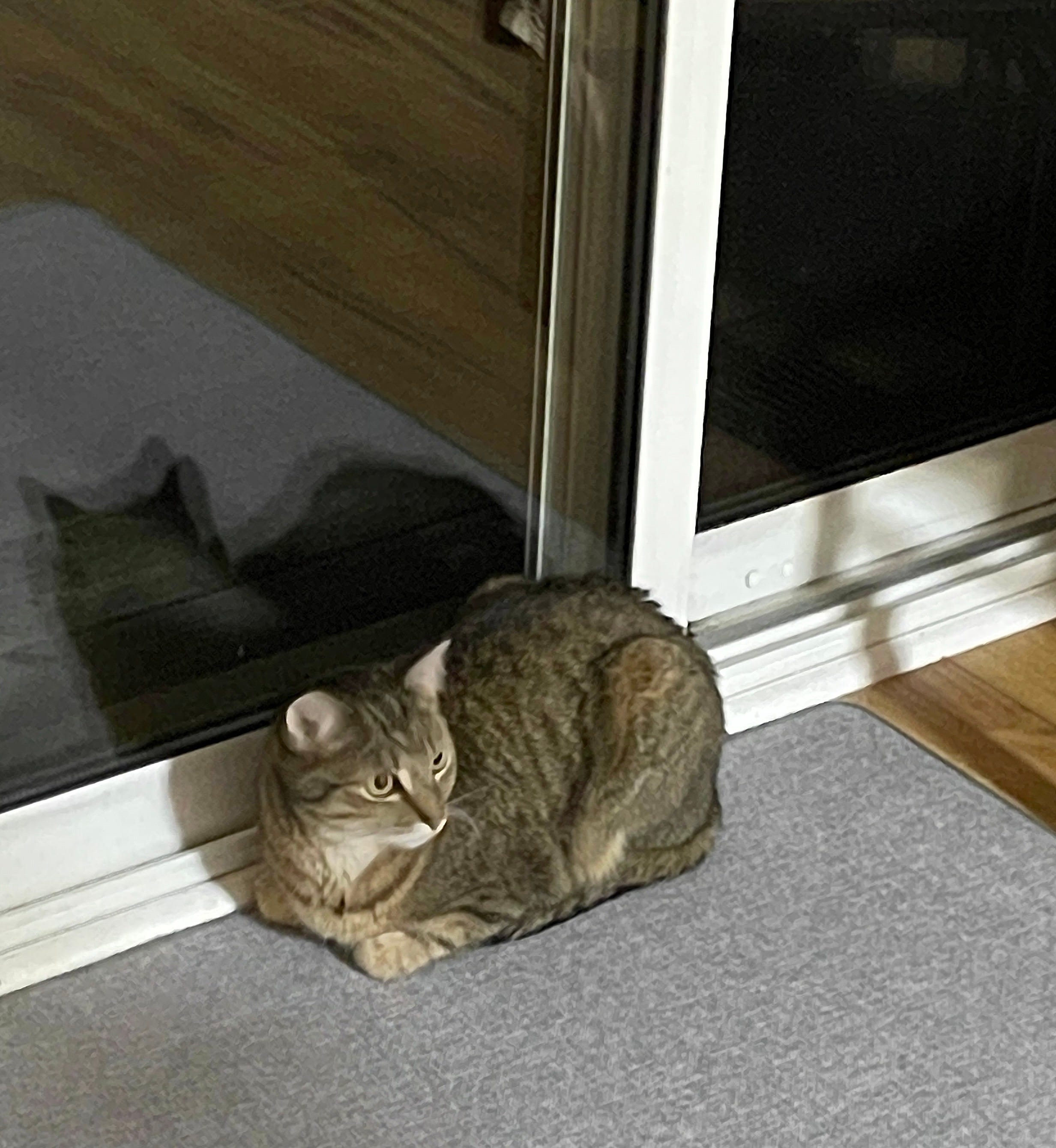
We have a houseguest for a while: a lovely tabby cat named Atlas. My niece had offered to cat-sit him while his family travelled, but it turned out her allergies were too bad for him to stay with her. So he’s living with us now, quite happily after the first night, when he cried most of the night, and the second, when he woke me up about four times to be fussed. Now he sleeps through the night in the crook of my legs, and we’ve barely heard a mew from him recently. It’s nice to have a cat in the house again for a while.

On the writing side of life, I spent a full day on the fifth floor of the university library just after the last of these newsletters went out. Why? Because that’s the floor where I wrote most of my thesis, forty years ago, and my brain still clicks into focused work mode when I’m there. I chose a carrel as close to the one I used four decades ago, and got to work outlining the rest of An Unwise Prince. Successfully, thank goodness, although I’m sure a few deviations will still occur.
My character Luce is a physician, as are other minor characters, and one of the most interesting things to research for this time period (roughly the 13th century, were this our world) is medical knowledge. In this scene, young Audun has been attacked by a group of his fellow captives:
A foot hit him in the lower back. Audun curled, bringing his arms up to protect his face. Another kick. Pain burst in the side of his head. He moaned. A guard shouted. Running footsteps, commands, curses. Someone touched his shoulder. “Can you stand?”
Audun uncurled himself. Even that movement made him dizzy and sick. “I don’t know.”
“Slowly,” Rothgar said. He helped Audun to stand. The world swirled, tipped, blurred. “Take him to the infirmary,” Audun heard, before darkness took him. “And deal with that lot.”
He woke to a woman’s voice. His head hurt, and his mouth was dry. He tried to sit up.“Don’t,” the voice said. A figure came into focus, slight, dark hair tied back. “I am Samar, the physician. You must lie still. You were kicked in the head. Do you remember?”
Thinking felt like wading through a bog. “I think so.”
Samar turned away briefly, then handed Audun a cup. He drank, the water cool and welcome.
“There is no damage to your skull beyond bruising, but your brain has been shaken,” Samar told him. “For several days you must remain under my watch. Someone will wake you every few hours. It is necessary to ensure you have not fallen unconscious as you sleep. I have told your captain.”
Is Samar’s knowledge of concussion reasonable? Yes. It was the 10th-century Arab physician Ibn Zakariya al-Razi who, during the ‘golden age’ of Islamic medicine, first described concussion as someting different from other severe brain injuries.1 Building on al-Razi’s work, in the late 13th century Guido Lanfranchi of Milan described cerebral concussion in detail, describing it as contusio cerebri or a commotion of the brain.2
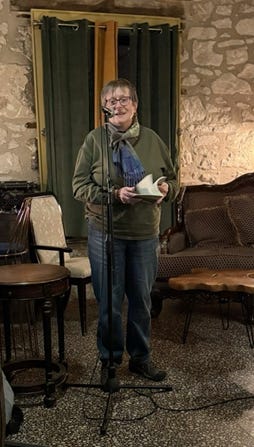
Outside of researching and writing, I was a featured reader at an Open Mic night in my city this week. In the historic and atmospheric Albion Hotel, I read ‘St Felix and the Beaver’, a funny (I hope) version of the story of St Felix of Frankia being rescued by beavers on the Babingley River in Norfolk in the 7th century. It’s one of the stories in my newly-released collection Beyond the Wall — and yes, the audience laughed.

My ‘head-cleaner’ reads in the past couple of weeks have been a couple of Lisa Jewell’s novels; my more serious books on the go are William Least Heat-Moon’s PrairyErth, a ‘deep ecology’ study of one Kansas county (I’ve read it before, but not for decades) and The Book of Bogs, a Little Toller collection of essays, poems, reflections and stories celebrating peat moorlands and bogs.

This week’s musician is Frank Profitt with ‘Beaver Dam Road’. Frank Profitt was an Appalachian banjo player and balladeer whose musical work centred on the recording of traditional American folk music. He is credited with bringing ‘Tom Dooley’ to a wider audience. This recording is off a 1961 Folkways album.