
This Writer's Diary: 10 Weeks.
Week 2

Monday 16th February
The first truly sunny day, but with a brisk wind to accompany the blue skies and temperatures only a handful of degrees above freezing. However! I’ve been here over a week, and I haven’t seen the sea. Or the salt and fresh marshes. And we have appropriate clothes. So out we head, appropriately layered with windproofs and gloves, hats and scarves.
We debate the sea-dyke walk from Thornham to Holme NWT1 reserve, but opt for Titchwell RSPB2 reserve instead, since it has bird hides in which we can escape the wind. We’re there before official opening, but it doesn’t matter: the reserve is always open, just not the loos and the cafe. I strap on the binoculars, hoist the spotting scope onto a shoulder (it’s mine, not Brian’s, so, I carry it), and head out along the public footpath to the beach.
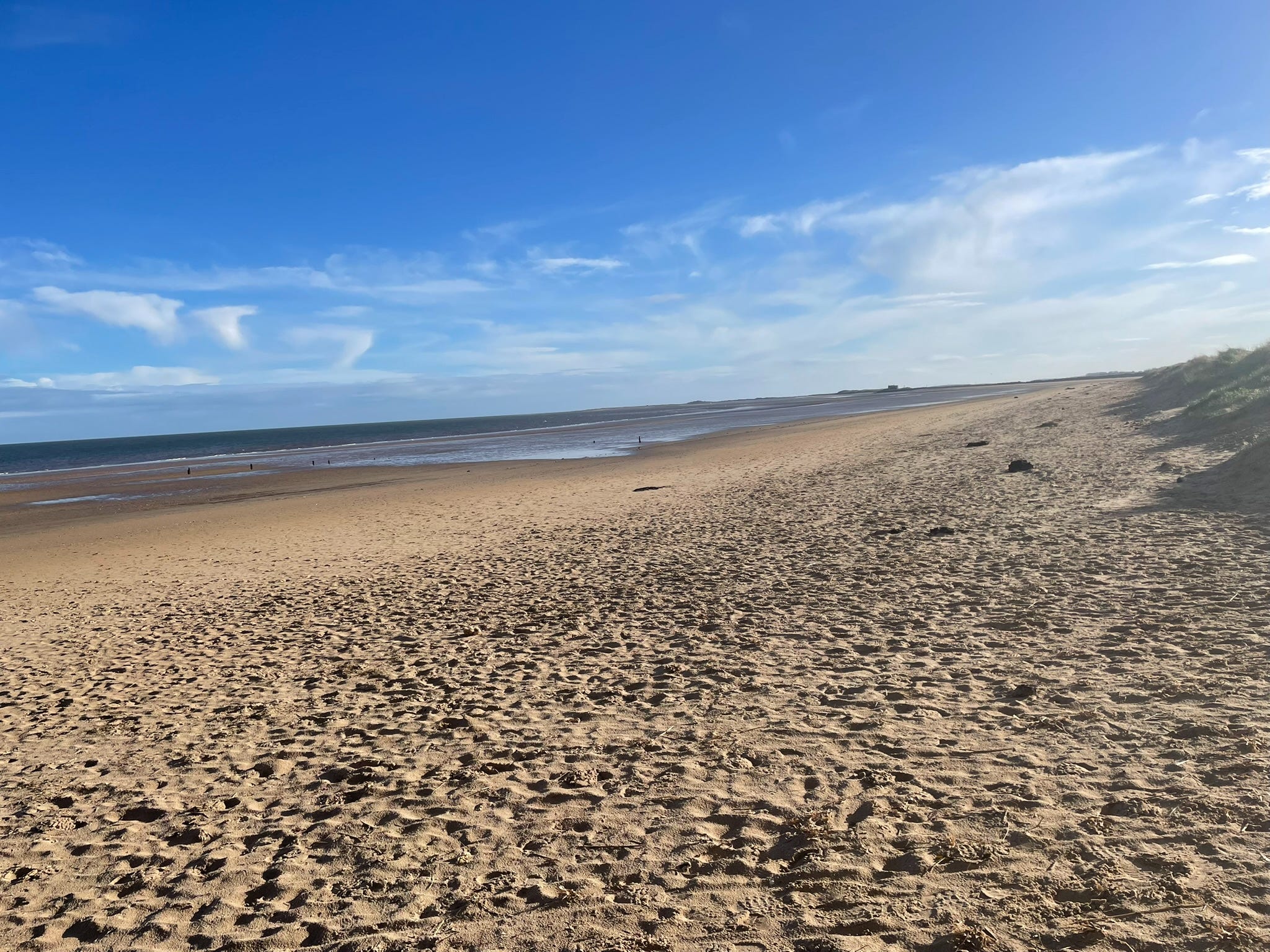
The birds are those usual for mid-February; wigeon and teal, avocet and golden plover, shoveler and lapwings. Brent geese, dapper in black-and-white, feed in the shooting marsh (I don’t think it is still a shooting marsh, but that’s what it was when we first came, and that’s what we call it still) to the west of the footpath. There’s a snipe, and lone snowy egret, and redshanks, of course. At the edge of the sea, oystercatchers and sanderlings and godwits feed.
‘Reclaimed’ from the sea by the dyking and draining work of the late 18th and early 19th centuries, Titchwell was grazing marsh up until about fifty years ago. The marshes on both sides of the footpath were used as bombing ranges in both world wars, and the remains of pillboxes still stand. The land continued to be used for both military and agricultural uses up until the last third of the 20th C, when the RSPB bought the land and developed the reserve. It’s reputedly the RSPB’s most visited reserve.
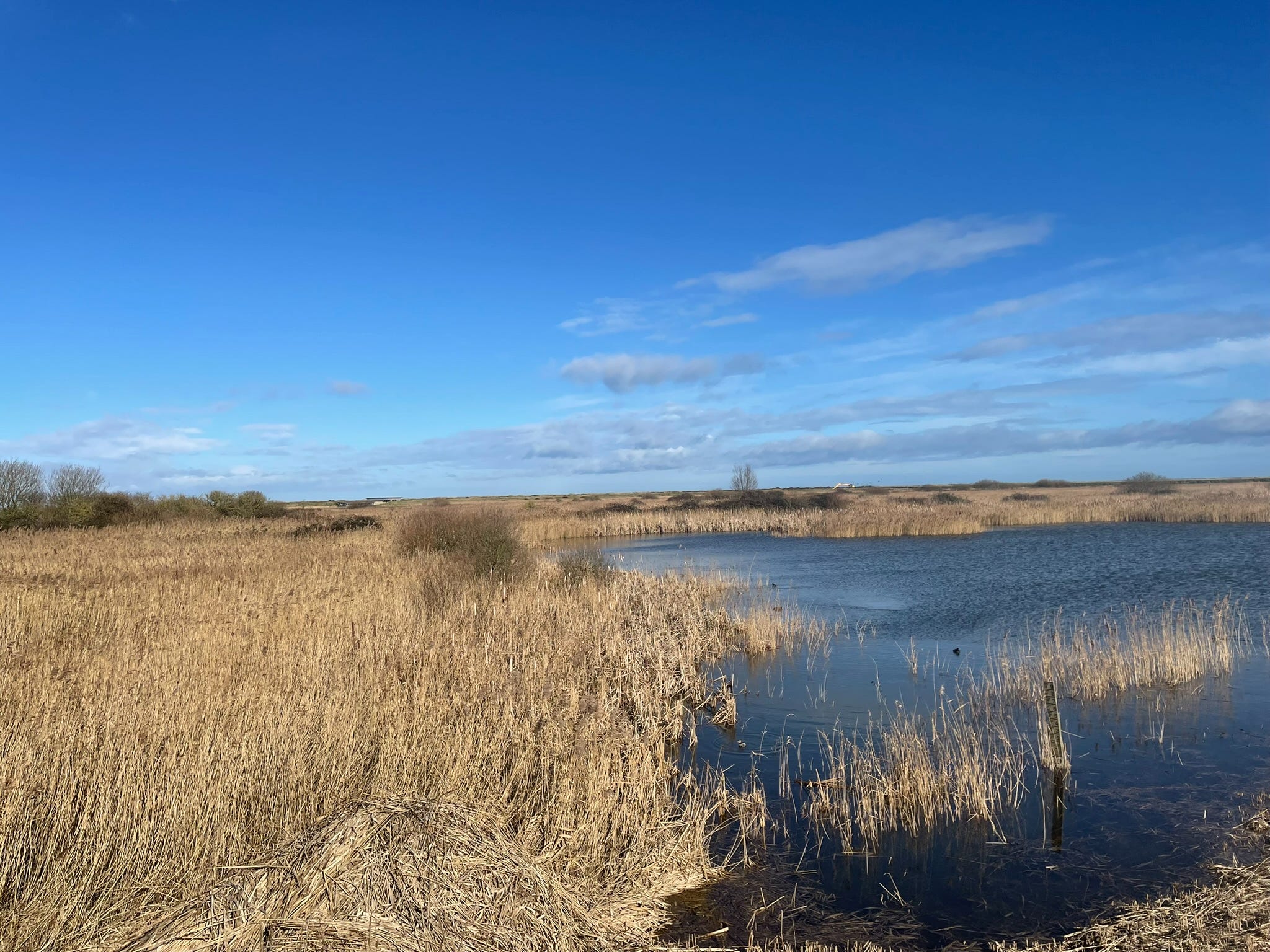
Titchwell’s not really all that big, with limited access for humans — but that’s ok. It’s still one of my favourite places on this coast (or in the world, really). I’ve seen bitterns fly over the reedbeds, and a dozen marsh harriers dipping and rising. There’s the occasional glimpse of bearded reedlings, flitting from stem to stem, and the fairly reliable water rail in the ditches. For many years I greeted Sammy, the black-winged stilt that lived here for twelve years; now it’s the tawny owl that’s roosted in the same tree on the woodland path for at least the last three years. A surprise today is a least weasel, popping up near a pile of cut reeds at the edge of a lagoon.
But as much as anything, it’s the light here, that clear sea light, and the sound of wind in the reeds, and the long long views that I love. I gave this landscape to the home of one of my characters in An Unwise Prince, Audun:
‘the arching sky at Torrey, the saltmarsh, the birds feeding at the tide’s edge. The thought that he was leaving it for many years, perhaps forever, stabbed at him.’
Tuesday 17th February
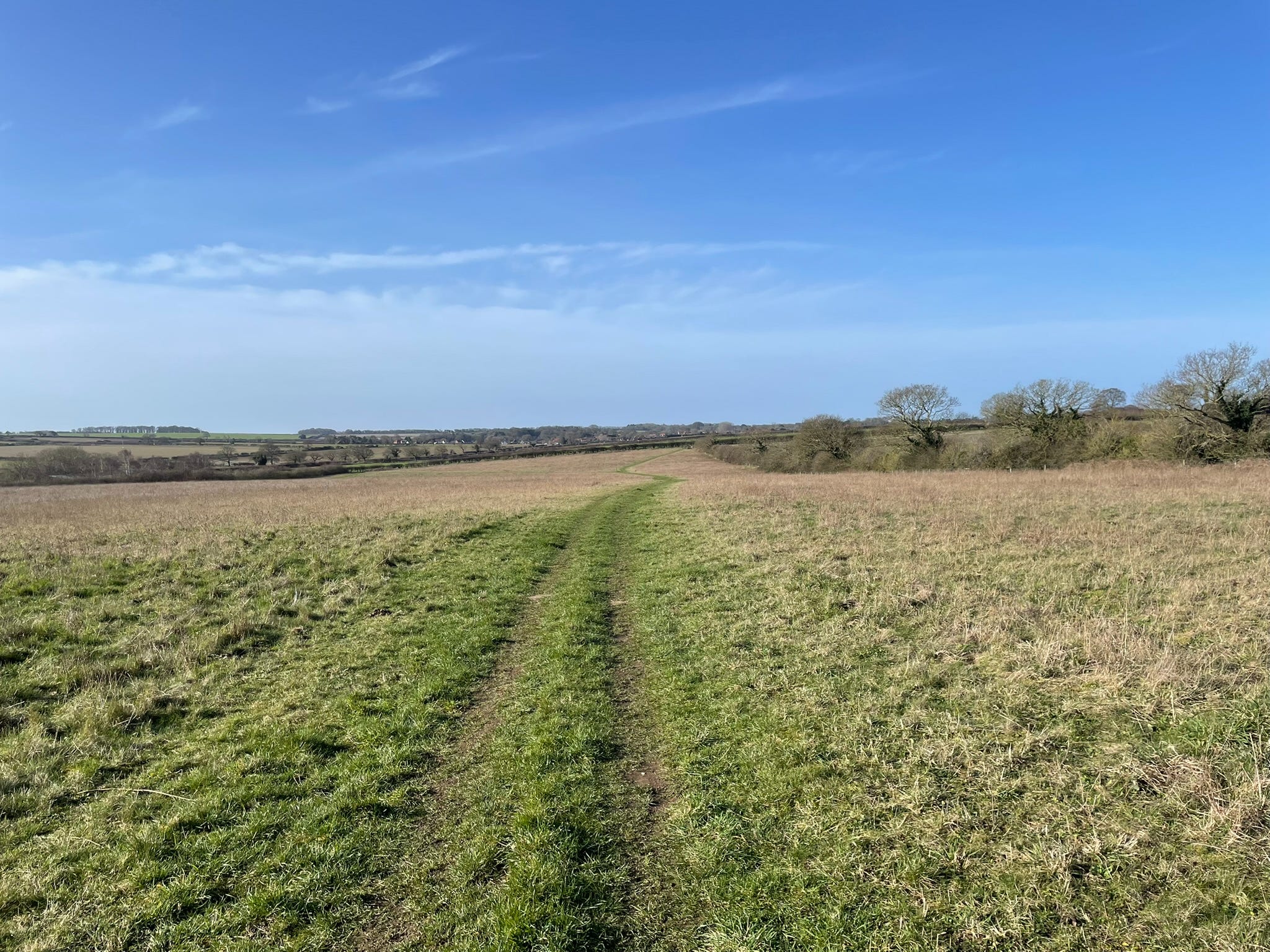
Another clear, cold day, again with strong breeze. A day to walk where there are hedges and woodland for shelter: a day for Courtyard Farm, near Ringstead. Privately owned, organically farmed, and crossed with footpaths public and permissive, Courtyard Farm is a favourite walking place.
We spend just under three hours here. Lark song accompanies us through most of the walk; in the woodland sections, tits — long-tailed, blue, great — call. A lone fieldfare is perched in an oak tree. Hares bound across the fields, and a colony of rabbits huddles near a fenceline. We talk sporadically, about plot tangles, about the birds, about what we can see.
I host my writing group via Zoom tonight, so when we return home I read and make suggestions on a couple of pieces, comment on a potential non-fiction book structure for another member, and worry about my own contribution. The beginning of a commissioned short story, it’s nagging at me. It begins in media res, and the necessary backstory is woven in, but I don’t think it works for a reader unfamiliar with my fictional world and characters. I’ll see what the feedback is tonight.
Wednesday 18th February
I was right; the story’s beginning doesn’t work for new readers. I spend an hour rewriting it, before we go out for another long walk on another crisp, blowy day.
Our walk today is on footpath and quiet lanes on the grounds of Houghton Hall, built by Robert Walpole (effectively Britain’s first Prime Minister) in the first half of the 18th century. We wander through woodland and alongside pasture and arable farmland. Birds are scarce today, for some reason, but this is always a good place for nuthatches, and we see and hear several. Red kites and buzzards circle over fields being spread with pig manure, and a kestrel hovers in the distance. Larks and meadow pipits and lapwings dominate the arable and pasture: some years these fields can be full of redwing and fieldfare, but not this year. A pair of grey partridge run and then fly at our approach.
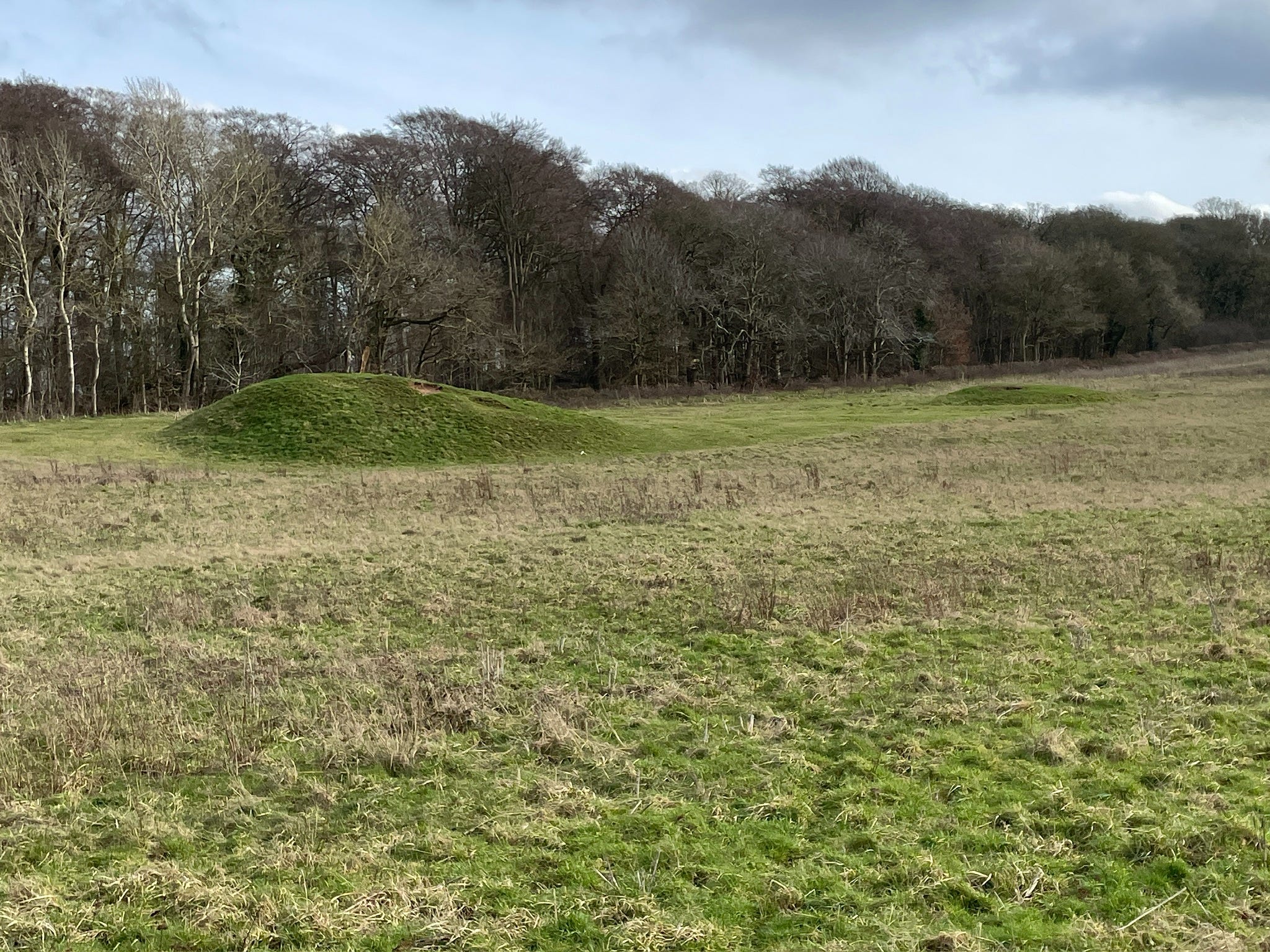
Two of the pasture fields to the east of the Peddars’ Way, an ancient trackway/Roman road that runs across Norfolk from Thetford to Holme-next-the-Sea, hold Bronze Age round barrows; there are more just to the north and west of the track. One — or what remains of it — lies in a small triangular woodland called Anmer Minque, traditionally the site of a battle between Roman soldiers and Boudicca of the Iceni. (There are quite a lot of these ‘traditional battle sites’; take it with a grain of salt.) A barrow a bit further west, in a small copse known as Paston’s Clump3, reputedly was used as an Anglo-Saxon moot hill. Layers of history here: prehistoric, Roman-era, Anglo-Saxon, medieval.
Thursday 19th February
Until King’s Lynn’s new library is open (March 16th) if I want solid research time the closest decent library is in Ely. Not that going to Ely is a hardship! I walk up to the city centre through the Jubilee Gardens. What are now lovely gardens (complete with eel sculptures) was once a busy medieval area of barge channels, workshops and warehouses, along with houses dated to the 12th century, and a pottery kiln likely related to the production of ‘Ely Wares’, using the Kimmeridge clay that formed the fenland island that Ely occupies.
Among the workshops in this centre of commerce and trade were ones that utilized the reeds and rushes and osiers of the surrounding fens. I’m going to research this a bit more, since in An Unwise Prince, Audun’s mother runs a workshop that does exactly this, making baskets. It’s the sort of background information I should know, as the author and world-builder, but I won’t bore my readers with details.
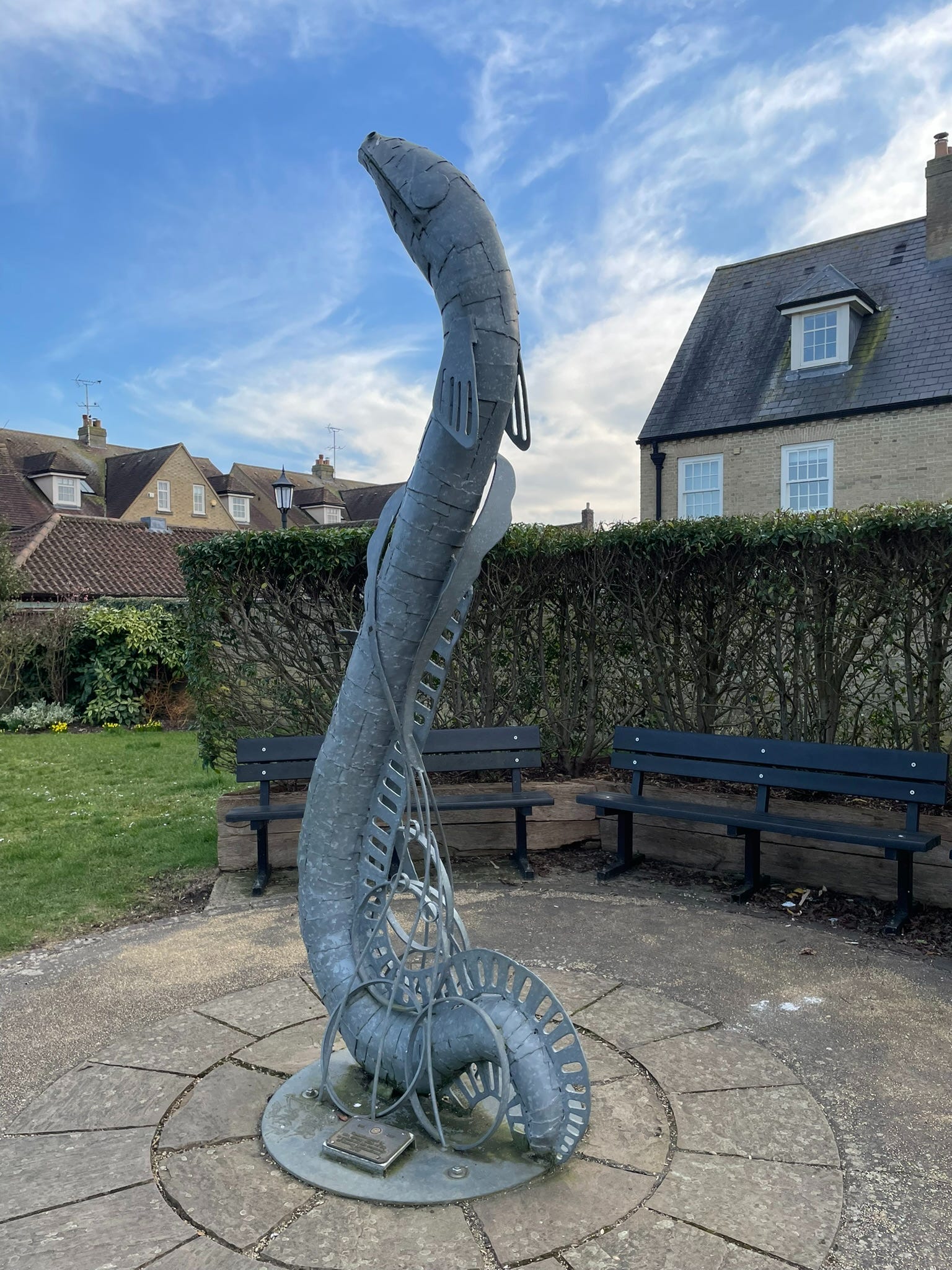
Friday 20th February
A wet day, so, back to Ely, this time with my husband. We potter around the shops until the rain becomes heavy, and then hide in Topping & Co (an absolutely wonderful bookshop) for a while. I can’t buy books, not ones I would take home, because there just isn’t enough luggage allowance, so I photograph the covers of all the ones that capture my interest. (Well, not ALL — that list would be almost endless — just the ones I think might be useful for the second draft of An Unwise Prince or in its sequel, A Distant Obligation.) I’ll see if my local bookshop in Canada can order them — sadly that’s often not the case with UK published books — and barring that, there’s always Blackwells, who happily ship to Canada with postage included in the price. Here is most of them — one for pure pleasure, the rest for research (which is also pleasure, really).
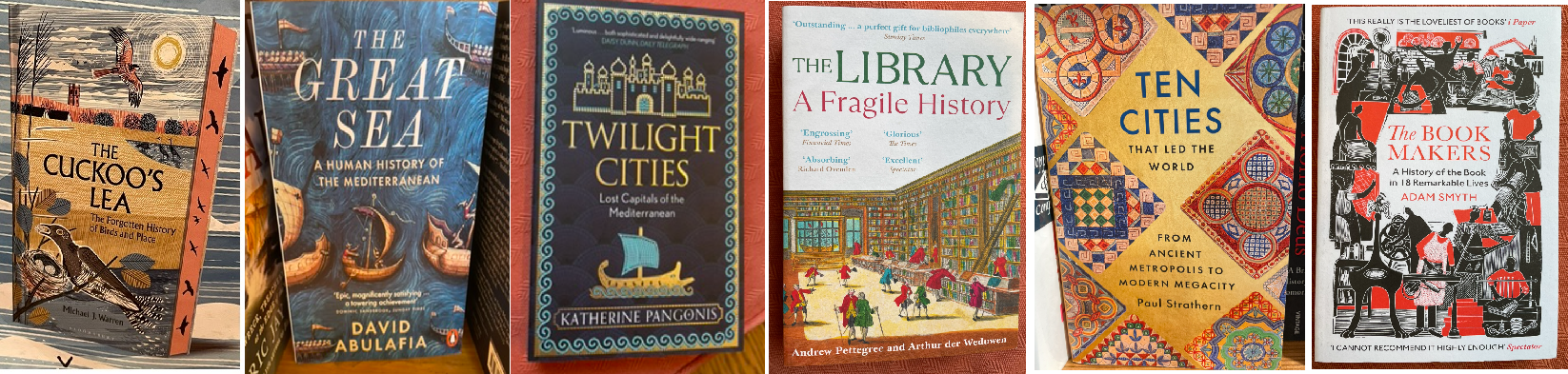
Saturday 21st February
The last weekend of half-term here in Norfolk, and Sandringham Country Park is teeming with children and dogs on this partly-sunny morning. (If there are paparazzi around, they’re all down at Wolferton, 5 km away. Anecdotally there have been reporters here asking for people’s thoughts about Andrew-previously-known-as-prince, but they’re not in evidence today.)
I slept badly last night, my arthritic right knee painful, for no obvious reason, and after a latte I’m content to just wander and listen to bird song for a while. Away from the cafe-and-shop area and the childrens’ playground, it’s much quieter. Two buzzards soar overhead, screaming.
Helleborus and aconite and snowdrops, and flowering shrubs I can’t identify, are all in bloom in the gardens around the shop and at the gates to the Arboretum. In the towering pines, tits call, and maybe goldcrest — my aging ears are having trouble hearing their high-pitched call now, and the Merlin app is no help (the iphone’s microphone probably needs cleaning again). I’m walking with jacket undone, no hat, no gloves: it’s 11 C. A jay flashes by, and in a hedge on the walk back into the village a dunnock is singing its heart out.
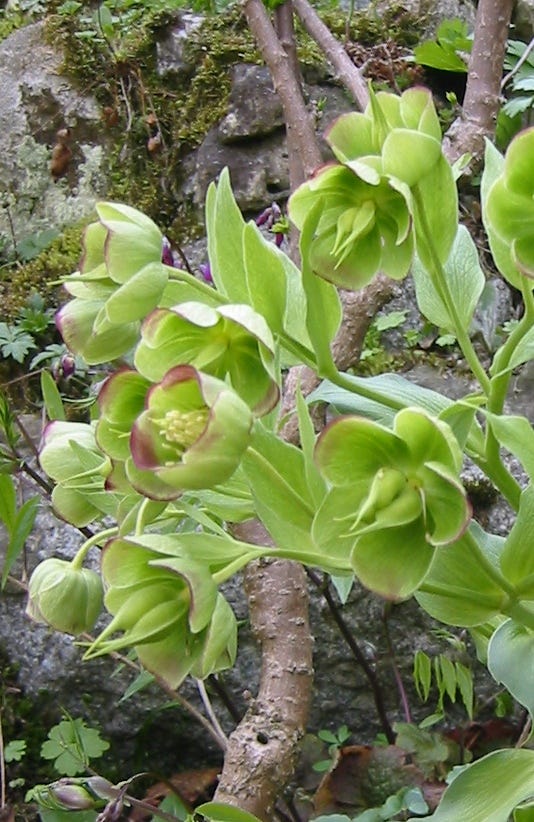
I’m wrestling with the short story: it wants to be longer than it can be. Actually, it wants to be a book, I can tell: the ninth of the Empire’s Legacy series. Will I let it be, eventually? Not until I’m done the ones I’m working on. (I do realize that the last time I said this, I wrote the stand-alone Empress & Soldier instead of the next book in line.) But not this time. No. No. No . . .
Norfolk Wildlife Trust
Royal Society for the Protection of Birds
Norfolk’s famous Pastons? Yes. In 1596, Edward Paston built a house at Appleton, about a kilometer to the west. The house was destroyed by fire in 1707.
Books have a tendency of sneaking up! I'm currently trying to find a way to consolidate my last year's worth of work. No ideas yet; still dealing with collection.